A census is a complete listing of a population, and it may contain additional metadataabout that population. The most commonly referenced census in the United States is the one conducted every 10 years by the federal government. The census is required by the United States Constitution for the apportionment of seats in the US House of Representatives. The additional demographic data captured by the census varies from decade to decade, and may be useful to researchers. After 72 years, census recordsbecome available to the public though the National Archives and Records Administration as well as sites like FamilySearch and Ancestry.
Cities, states, and other organizations may conduct a census too, and this may happen once, intermittently, or at regular intervals. Censuses can even be conducted on non-human populations.
Census records are a valuable tool for anyone conducing genealogical research. They can also be useful for property researchers looking to learn more about who previously lived at a location.
Accessing Census Records
Using Census Records
Current Census Statistics
Other Census Records
Promoting the Census
Accessing Census Records
We recommend using FamilySearch, HeritageQuest or Ancestry.com for searching the census. Both of these databases offer text-searchable copies of the U.S. Federal Census. It can also be viewed at the National Archives and Records Administration, but this version is not text searchable, and locating a family can be difficult as these records are arranged geographically rather than alphabetically.
Scroll down to Ancenstry.com Library Edition and click on it
Scroll down to “Search US Census” and click “Search Now”
Use the search boxes to search for a specific person
Or use the boxes on the right to select a specific census to search.
Enumeration Districts
For purposes of counting residents for the Census, the entire country is divided into small Census Enumeration Districts which represent the area of households that a census taker can count in a fixed period of time: 2 weeks worth of counting in a city, and 4 weeks worth of counting in rural areas.
Maps of enumeration districts are held by the National Archives, and many of them can be viewed online. Additionally, addresses can be searched to identify the Enumeration District using the search tool.
View Census Enumeration District Maps
Search Census Enumeration Districts
United States Census Enumeration Districts. 1940. Louisiana. Orleans Parish. New Orleans.
Using Census Records
The Census Questionnaires change with each Census. Use this link to the Census Bureau or the button to the right to learn more about what questions were asked every year. Look below to learn about information that is frequently included on the Census:
Decennial Census of Population and Housing Questionnaires
Names and Relationships
Census records include lots of information about the individuals recorded in them. Although the exact layout changes, one of the first columns is generally the name of the person. The first person in each family listed is the head of the household, and everyone else is identified by their relationship to that person (spouse, child, sibling, boarder, etc.). At a glance you have a snapshot of who was living under the same roof at 10-year intervals.
Researcher Hint: If your ancestor had a popular first and last name, checking the names and ages of family members can help you confirm if you are looking at a record for your ancestor, or someone who shared their name.
Ages
Census records also include ages of people. For children under a year, the age is usually given in months, and for everyone else it is listed in years. Remember that the census was not necessarily taken after a person’s birthday. If a child was born in May of 1928, and the census taker came around in April of 1940, then they would probably still count the child as 11, but if they came around in June then the child would be 12.
Address
The first column or two usually includes information about where the person lived. Census takers would walk up and down blocks, so families are listed by location rather than any alphabetical organization. Where available, a street address is generally included (though you may have to look back a page or two to identify the street name). When not available, especially in rural communities, other designators are used to indicate where a person lived. There may also be a column asking about whether the property was owned or rented.
Occupation and Education
Check the census to learn more about what your ancestor did for a living. Later years ask questions about how many years of schooling a person finished and if they were literate.
Demographics
Race, Nationality, and Place of Birth were frequently recorded on the census. Place of Birth could refer to a city, state, or even country. Some years they asked about citizenship status. These can all be useful for tracing your ancestors.
Supplemental Questions
Some years lines on the census would come marked with indicators that additional questions should be asked of the person whose name happened to be on the line. If your ancestor happens to be one of these randomly selected individuals you may gain insights into their life such as whether or not they served in the military.
These 2 pages from the 1830 census show that while only the names of the heads of household were recorded, statistics like race, gender, and age were also collected for all who lived at that property.
Grouped Households
Earlier censuses offer fewer details about individuals who were not the heads of households, but will include the number of family members and enslaved persons at the property.
Depending on the year, census records for correctional facilities, mental institutions, orphanages, and boarding houses may include the names of residents, or simply the number of them.
Missing Ancestors
Looking for a person who doesn’t appear on the census? There are a variety of reasons why you might not find someone, or why the information provided might not be a perfect match for what you know about them:
Misspelt name – look at the names of the rest of the family members to see if you can find a match; this can also be matter of handwriting making a name appear misspelt
Not born yet – if the census taker came through in March, but your relative was not born until July, they will not show up until the next census
Language barriers – if neither the census taker nor the family are native English speakers and they both speak different languages there could have been a miscommunication
Transient lifestyle – people who did not have permanent homes in census years could easily be missed
Not answering the door – whether they happened to be out that day or distrusted sharing information with the government people might not answer
Fear of repercussions – not wanting to admit how many people are crammed into a space
Child answering the door – child or other person who does not know all of the information requested by the census cannot provide a full acount
Researcher Hint: You cannot prove a negative. A lack of evidence, such as a missing census record, does not mean that a person did not exist or an event did not happen.
Missing Census Records
Although the census has been taken every 10 years since 1790, the bulk of the 1890 Federal Census was destroyed in a fire. With very few exceptions, there are no Federal Census records from that year available.
Current Census Statistics
Complete census records are publicly released 72 years after they are collected, which means that that next census published will be the 1960 census in 2032. While personal details are kept private during that time, general statistics gathered are available much earlier than that, and can be searched on the census’ website.
Explore Census Data
Other Census Records
New Orleans Area Censuses
This post primarily focuses on the Federal census, produced every 10 years to count the population of the United States of America and generate other statistics about its population, but there are other states and municipalities that generates their own census records. Additonal censuses held by City Archives & Special Collections:
This census, arranged by type of business, gives the name and location of businesses, the date the license was issued, the term of the license, and its expiration date for the City of Lafayette.
This census gives the name and occupation of householders in the City of Carrollton and tallies the number of males and females in each household, and the number of children in general age groups.
Other Federal Censuses
In addition to the Population Schedules collected by the Census, more data on farms, industry, and deaths were collected every ten years throughout parts of the 19th century. Like the Population Counts, these Schedules became increasingly detailed over time, and researchers should be aware that small farms and factories were generally not included.
Today the Census conducts many different surveys that area available for view as well. Check out the Census Survey Explorer to learn more.
Statistics on people who died in the year before the census was taken.
Available to search and view through Ancestry.com and HeritageQuest.
Promoting the Census
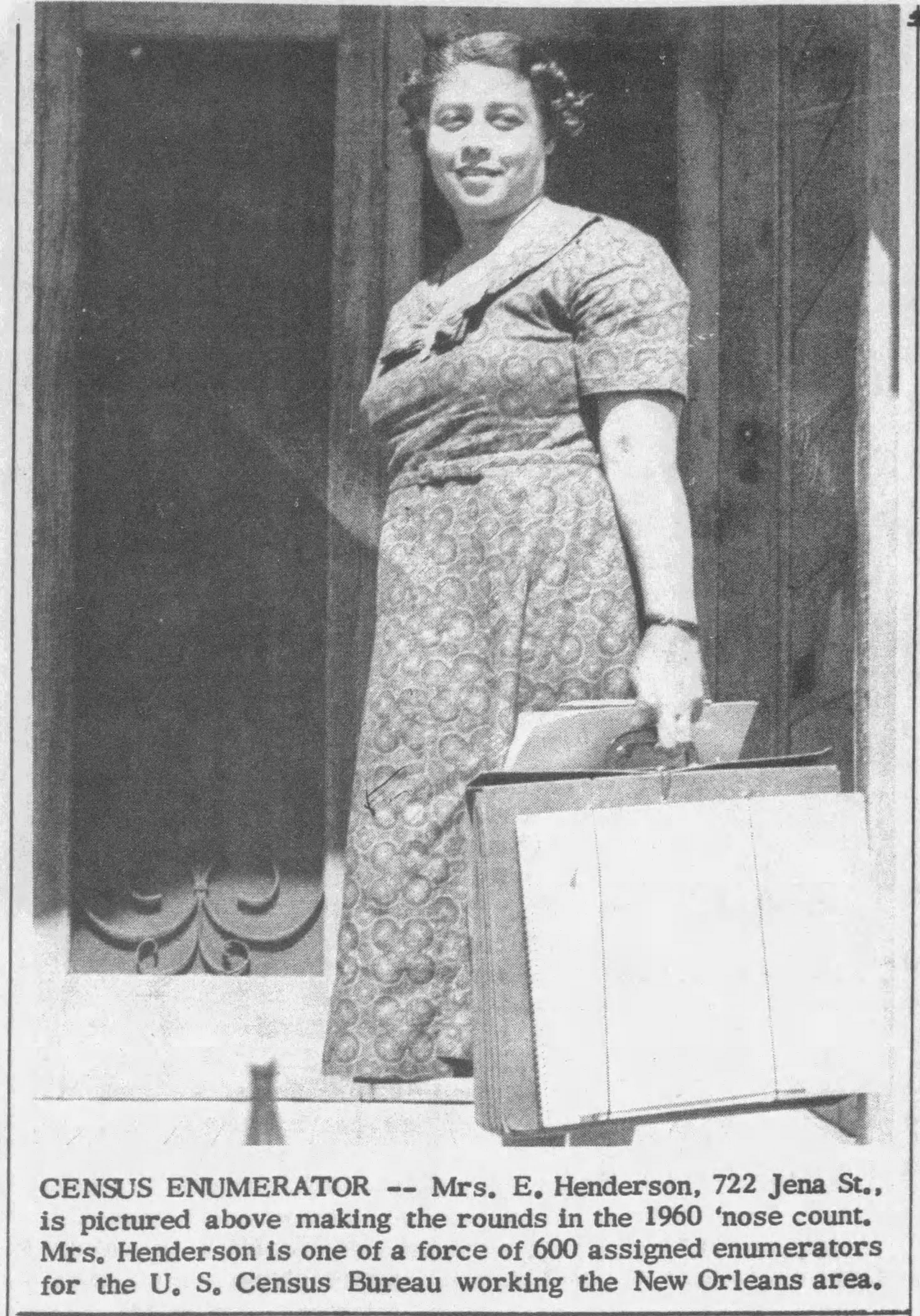
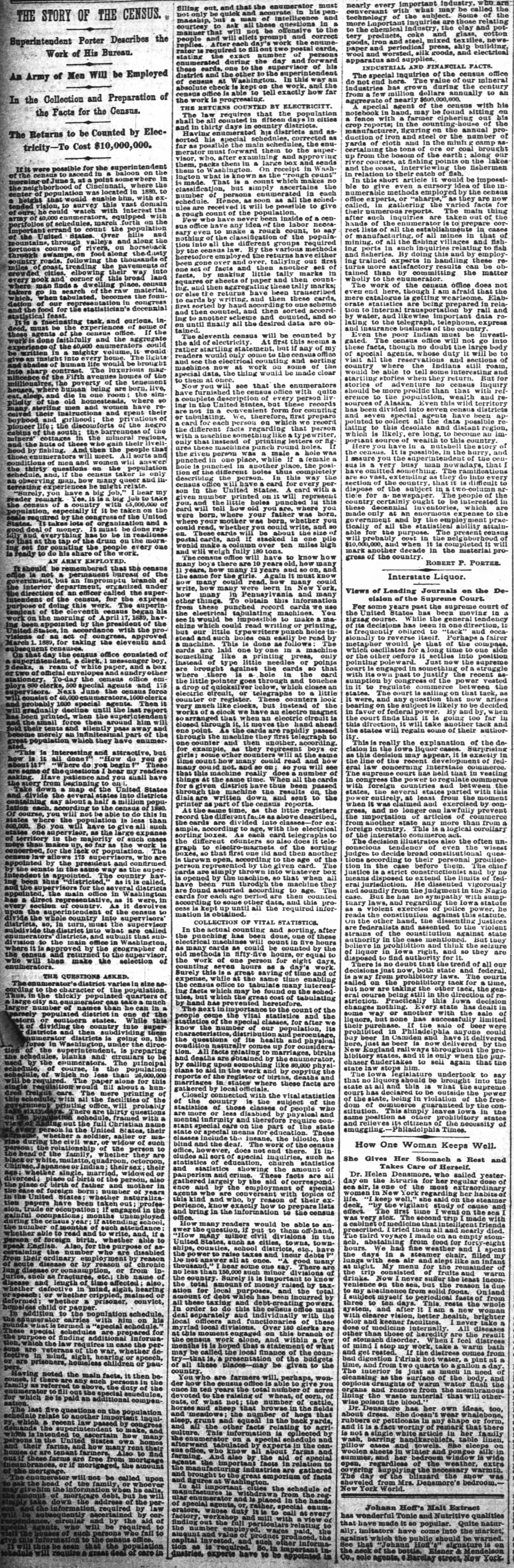
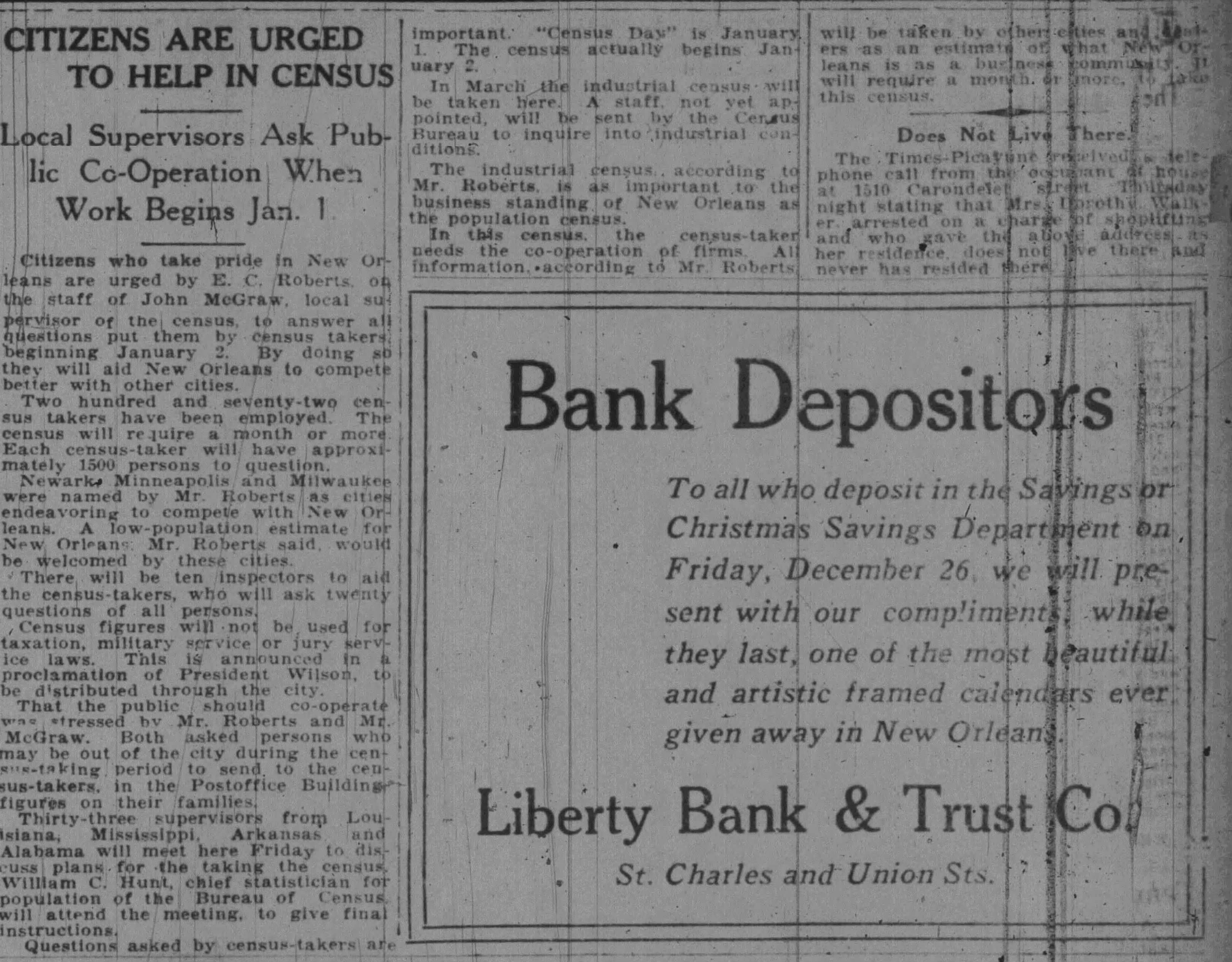
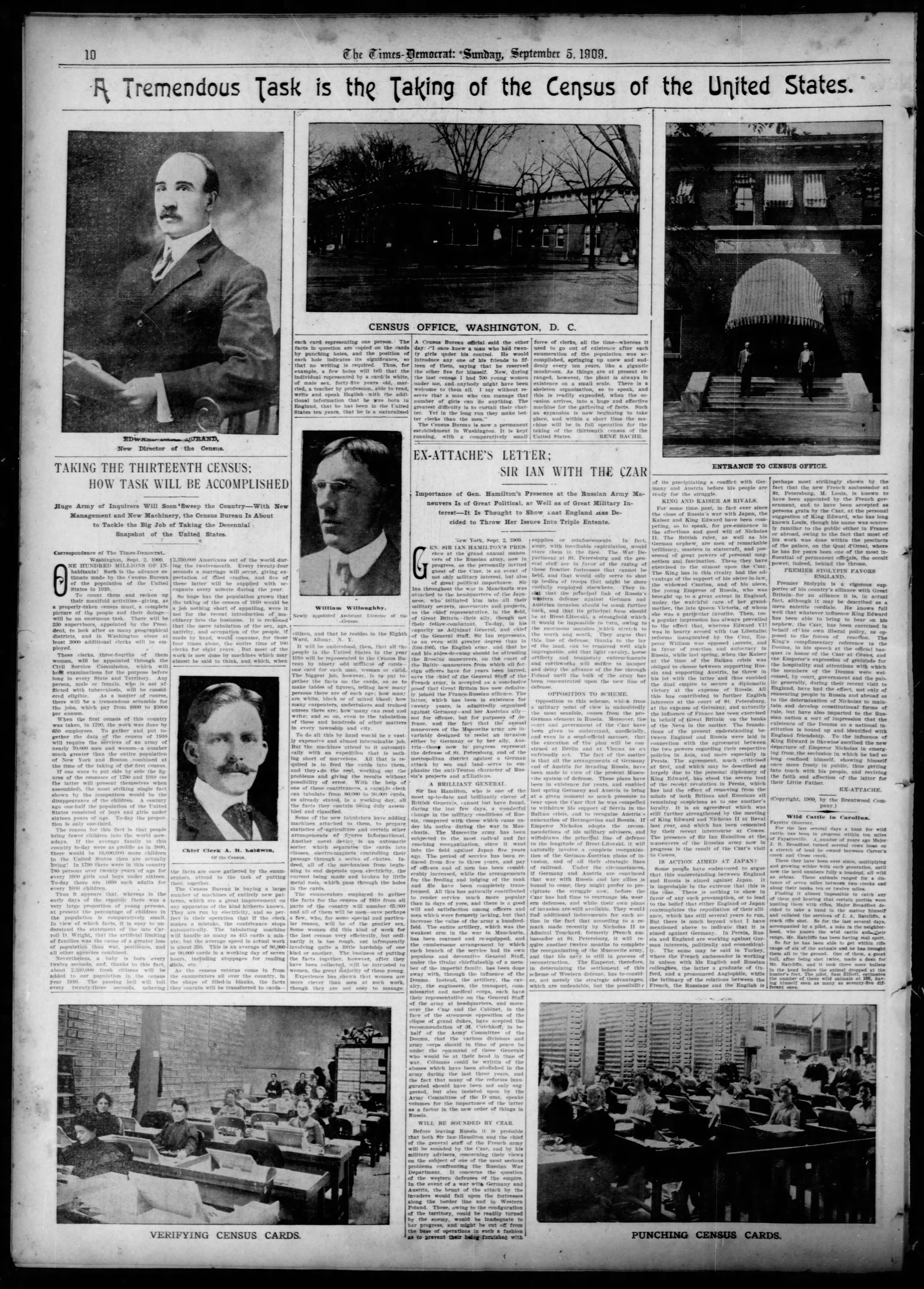
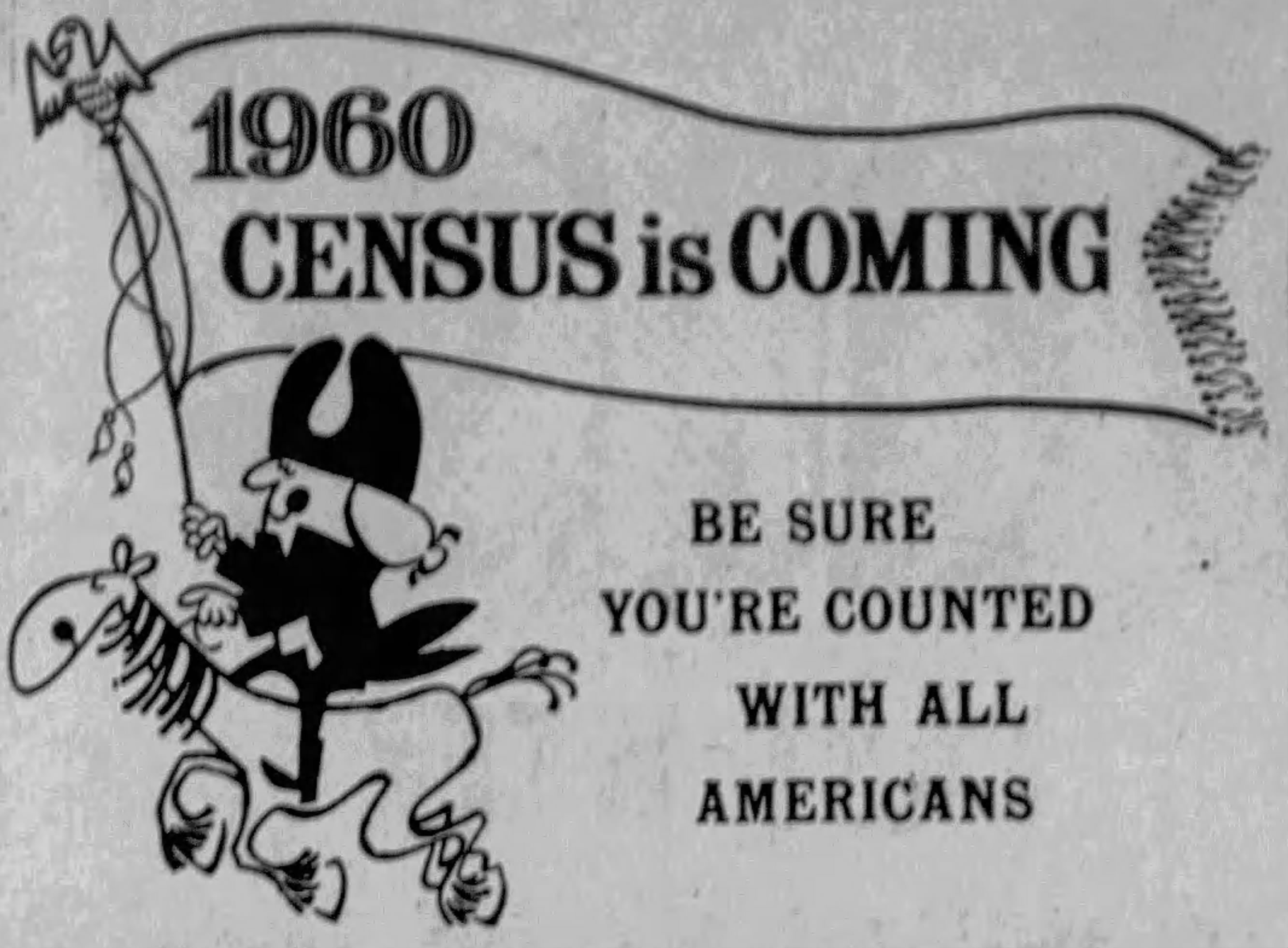
Since public participation is essential to a gathering a complete census, articles and advertisements were placed in newspapers to encourage people to take part in the census. Some were strictly informative, some shared detils about local hires, there was even a “Song of the Census Man” published by The New York Times and printed in The Times Democrat in 1905.
City Archives staff also joined in the fun in 2012 when the 1940 US Federal Census was released.
City Archives Staff in 2012 dressed as a Census Taker and Uncle Sam, celebrating the release of the 1940 Census