City Archives & Special Collections

Weathering the Storm: Reflecting on New Orleans’ Past

Currently on display at the Main Library, Weathering the Storm: Reflecting on New Orleans’ Past explores the City’s experience and response to major hurricanes through municipal action, emergency preparedness, and community resources. It will remain on display through 2025, marking the 20th anniversary of Hurricane Katrina. Here, the City Archives & Special Collections presents a digital version of the exhibit to share with our patrons.

New Orleans and the Gulf Coast has experienced its fair share of hurricanes. This exhibit will highlight some of the major hurricanes that have affected New Orleans throughout the 20th century, specifically Hurricanes Betsy, Camille, and Katrina. The exhibit will also explore the City’s shifting response to storms and disasters, through the Office of Civil Defense in the 1960s to the aftermath of Hurricane Katrina and the eventual creation of NOLA Ready in 2012. As disasters evolve, so too do municipal planning and response. 

The image to the right shows the paths of hurricanes along the Gulf Coast from 1831-1979. Click the image to zoom in and view storm paths and a chronological list of storms affecting the area. The practice of naming storms did not begin until 1950.

Explore  historic hurricane tracks of storms that have struck New Orleans and the Gulf Coast through the NOAA (National Oceanic and Atmospheric Administration).

Paths of Hurricanes Along the Central Gulf Coast, 1831-1979. From the Map Collection

From the General Interest Photo Collection, series: Natural Disasters.

London Avenue Canal

London Avenue Canal concrete cap installed on top of steel sheetpile wall, ca.1960s.

The Orleans Levee Board controlled the “flood and non-flood assets” of the Orleans Levee District from the late 1800s until 2007. They controlled the development of numerous subdivisions, the marina, parks, as well as management of the levee system protecting the City of New Orleans from severe flooding. Following Hurricane Katrina, the state redesigned the flood protection systems and diverted oversight of levee systems. Levee systems are now under the control of the Louisiana Flood Protection Agency.

Powered By EmbedPress

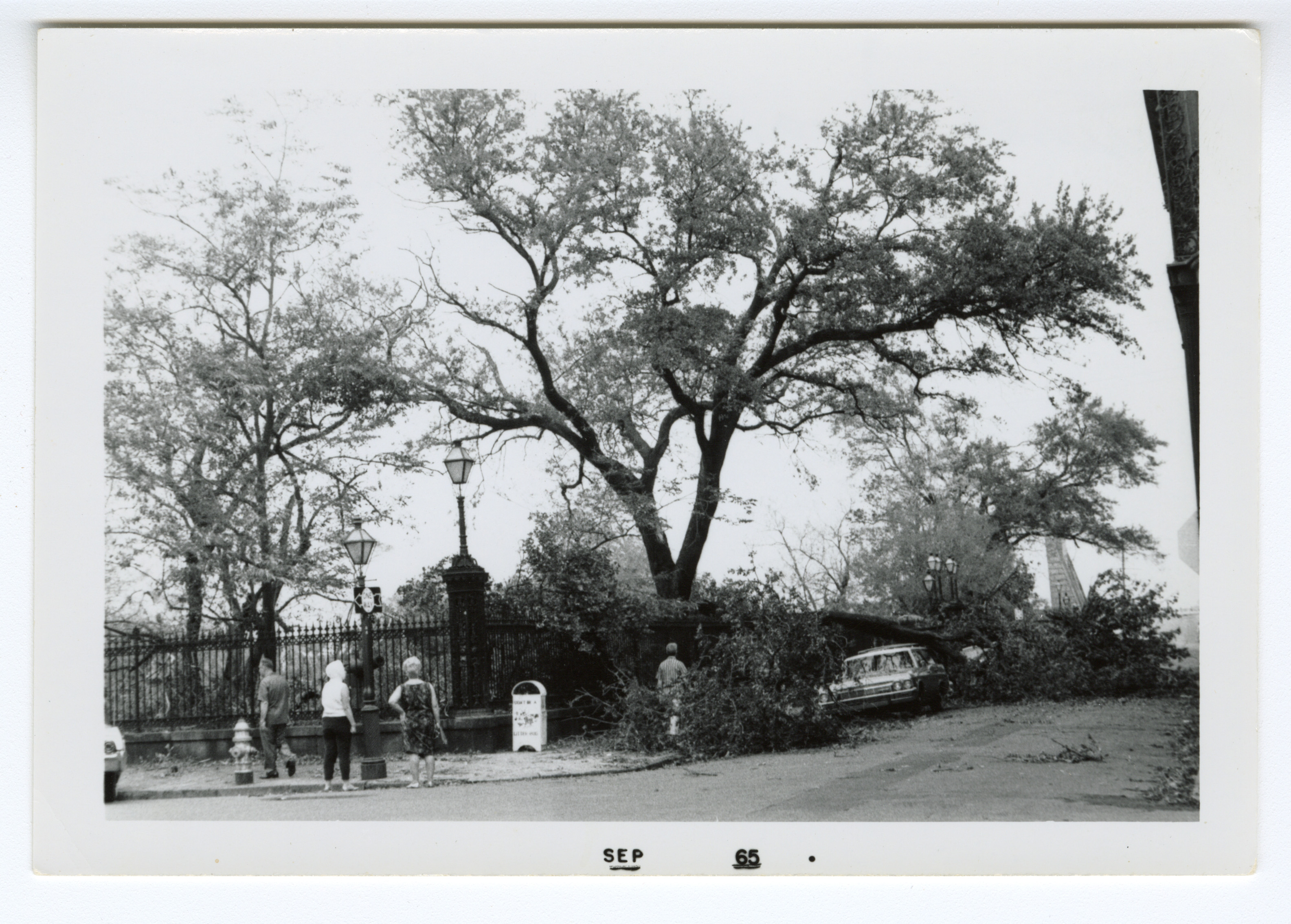
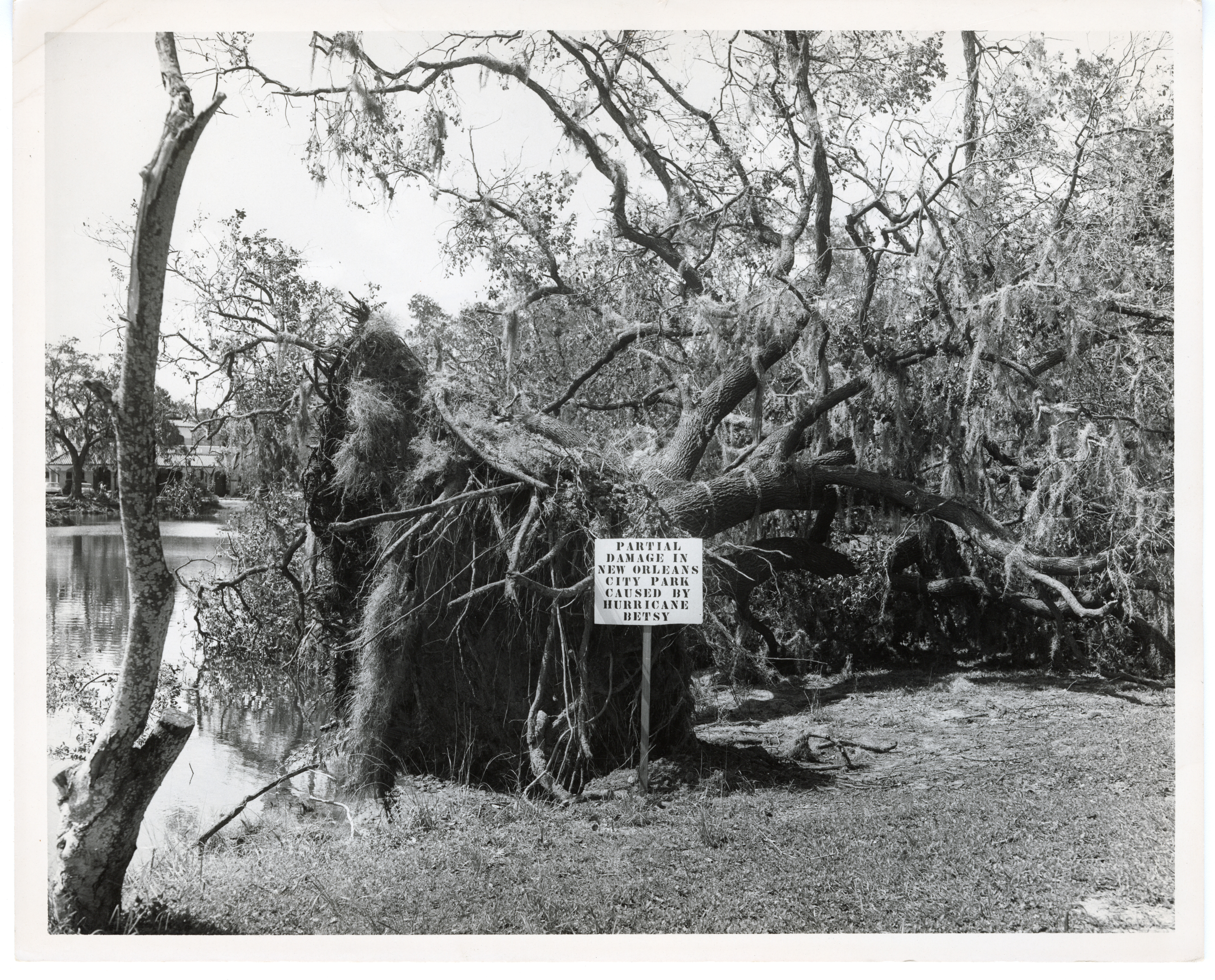
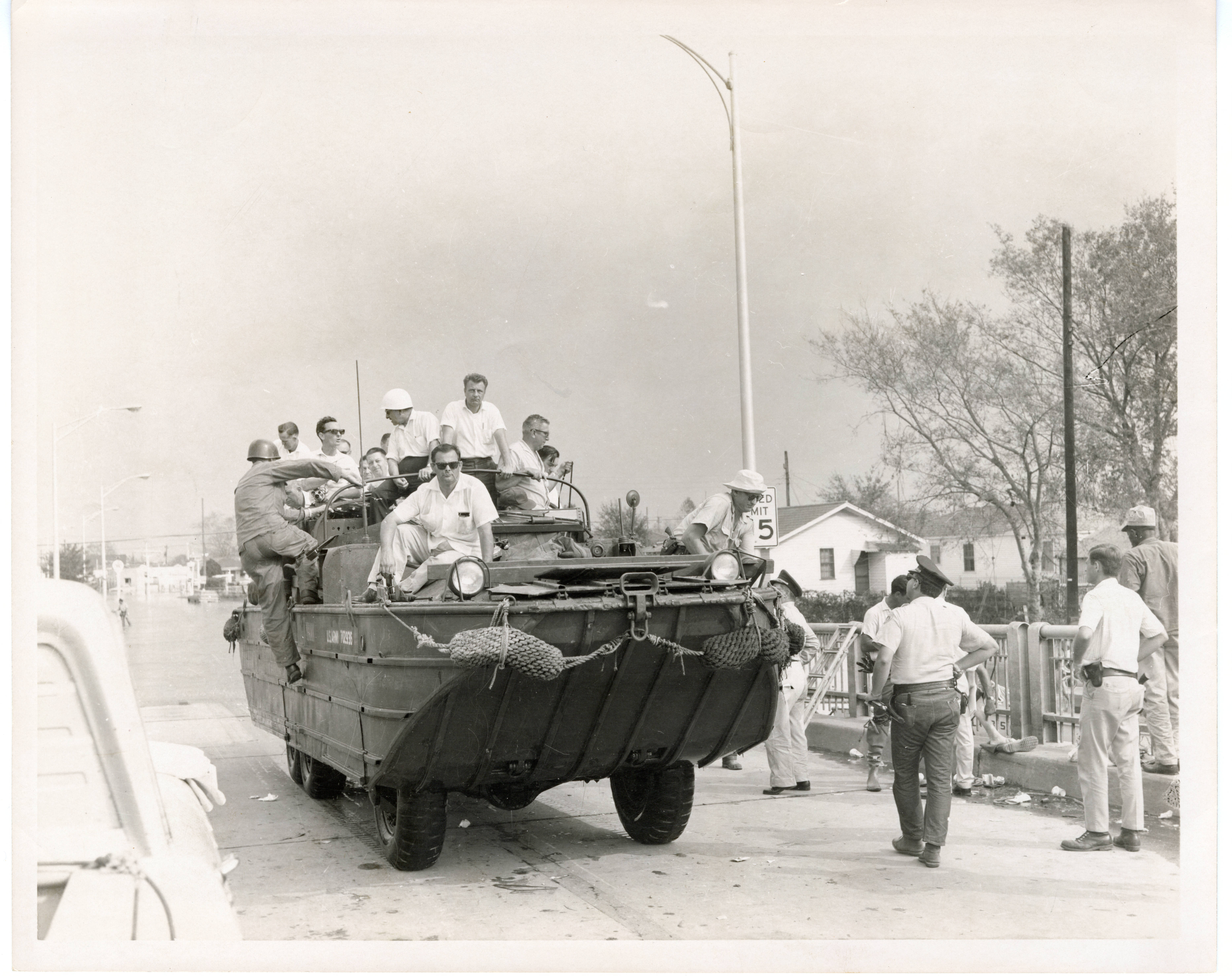
Hurricane Betsy, 1965

Hurricane Betsy made landfall on September 9, 1965. At the time, it was considered the most destructive storm in modern New Orleans history. By today’s standards, Betsy was a category 4 storm at the time of impact on the Louisiana coast. Storm surge and levee failures caused widespread flooding, the worst of which was experienced in the Lower Ninth Ward. Although many people were evacuated in anticipation of the storm, sixty-four people lost their lives, and over 150,000 homes were destroyed.

Western Union telegrams sent and received by Mayor Victor Schiro in the aftermath of Hurricane Betsy, 1965. From the Mayor Victor Schiro Collection

Thank you letters from Mayor Victor Schiro, on behalf of the City of New Orleans, 1965. From the Mayor Victor Schiro Collection

 Shop window covered in tape with sign: "Hello, Betsy"

Images dated September, 1965. From the General Interest Photograph Collection.

 Large downed tree branches outside of fenced space, most likely Jackson Square

Uprooted oak tree in city park with sign: "Partial damage in New Orleans City Park caused by Hurricane Betsy"
Uprooted tree lying across sidewalk.

Men riding boat with wheels through street.

From the Mayor Victor Schiro Collection, 1965

Powered By EmbedPress

Southern Telephone News, published by Southern Bell Telephone Co., October 1965. 

Hurricane Camille, 1969

Four years later, Hurricane Camille struck the Mississippi coast. Camille was the most intense storm to hit the Gulf Coast, striking Waveland, MS as a category 5 hurricane, one of only four category 5 storms to ever make landfall in the U.S. More than 250 people died as a result of this storm.

While New Orleans avoided a direct hit, levees bordering the Industrial Canal again failed, causing flooding to the Lower Ninth Ward. Many were still recovering and rebuilding from Hurricane Betsy. Residents in affected areas were evacuated to shelters to ride out the storm.

Waveland resident writes to Mayor Schiro in the aftermath of Camille.

Mayor Schiro response letter, following Camille.

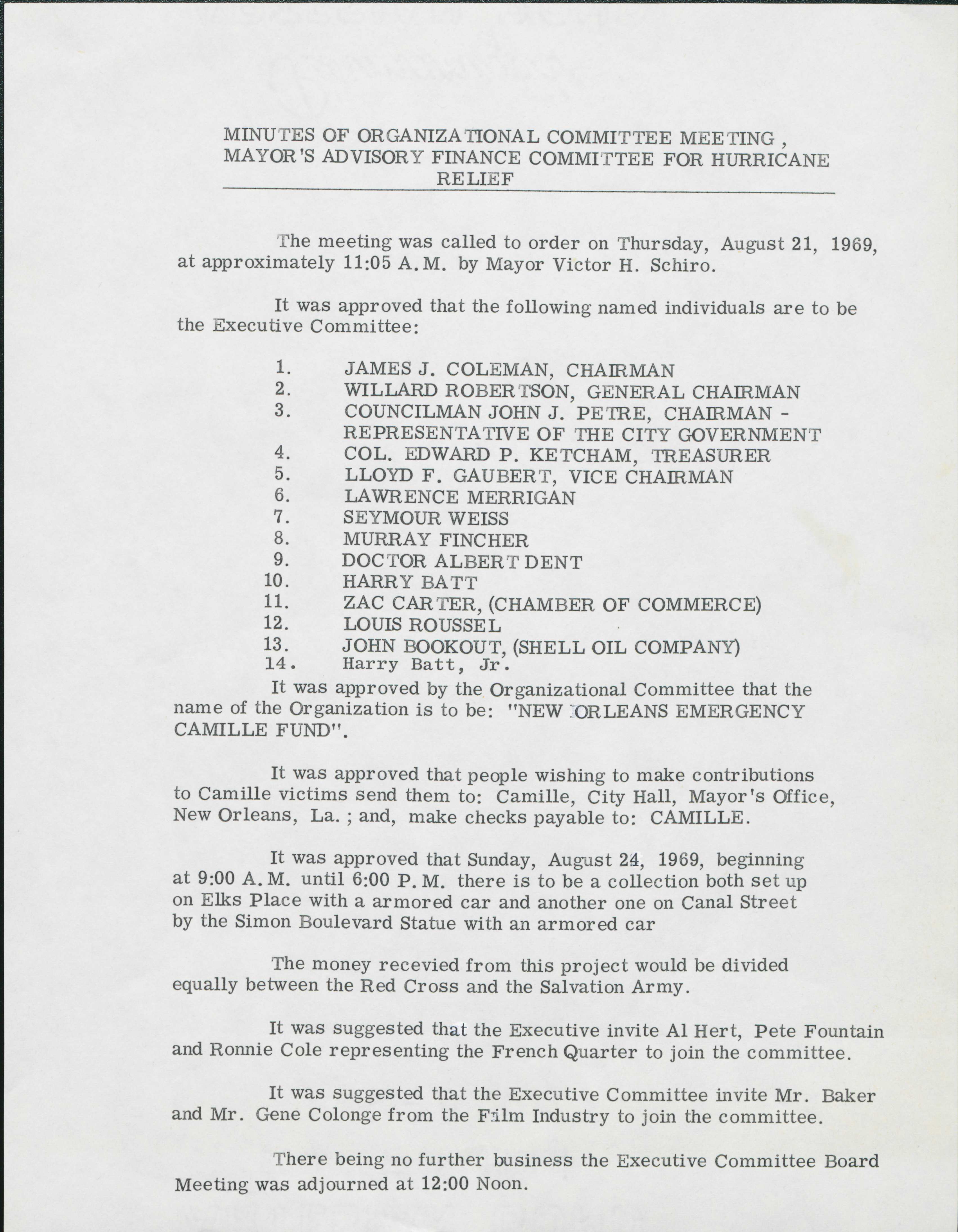
In the immediate aftermath of the storm, the City of New Orleans established the Hurricane Camille Relief Fund to assist those affected by the storm both in and outside of New Orleans.

Minutes of the Mayor's Advisory Committee for Hurricane Relief establishing the Camille fund, 1969

from the records of Mayor Victor Schiro, 1969

The Mississippi Civil Defense Council issued a thank you to Mayor Schiro and the Citizens of New Orleans for their assistance in relief efforts following Hurricane Camille.

Hurricane Katrina, 2005

Hurricane Katrina made landfall in New Orleans on August 29, 2005. Initially a category 5 storm, it weakened to a category 3 by the time it reached New Orleans. It caused mass flooding and devastation, covering 80% of the city in water. The failure of the levee system poured storm surge waters into the city, in some areas as much as 15 feet of water. For information about researching Katrina, please see the exhibit Documenting the Storm: Researching Hurricane Katrina in the City Archives & Special Collections.

Powered By EmbedPress

Flyover view of Ninth Ward, from the Sewerage and Water Board, August 30, 2005.

The media played a pivotal role in relaying information to displaced New Orleanians during those first few days following the storm. New Orleans held the national media spotlight as more images, videos, and stories came out of the City, detailing the extent of the storm damage. Here, we highlight some of the different ways that Katrina was covered in the media, pulling items from our collections that span the last twenty years. 

The Times-Picayune was a vital news resource through Hurricane Katrina and its aftermath. Reporting on the state of New Orleans won the newspaper a Pulitzer Prize in 2006. Access the Times-Picayune’s storm coverage through the Library’s newspaper databases.

The Angolite, Sept/Oct 2005

Many Orleans Parish Prison inmates were eventually evacuated to Angola, the Louisiana State Penitentiary. The September/October issue of the prison’s news magazine, The Angolite, includes a story on the evacuated OPP inmates that were brought to Angola. You can read the full issue by clicking the image above.

Powered By EmbedPress

New Orleans recovery remained in the national spotlight as the City continued to rebuild. To commemorate the 10th anniversary of Katrina, ESPN published the above special report, exploring how the New Orleans Saint’s (and their Super Bowl victory in 2010) revitalized and reunited the City.

New Orleans Public Library

After the devastating effects of Hurricane Katrina on the library system, staff and services were dramatically reduced. From 14 branches down to just three, in October of 2005, the New Orleans Public Library had reduced staff by 91% to just 19 people. But, the library continued to grow, adapt, and meet the needs of the community.

In June of 2006, the American Library Association showed its support for New Orleans by hosting the first major convention in the city after the storm. Mayor C. Ray Nagin spoke at the conference and welcomed the attendees to New Orleans. Volunteers from ALA helped to rebuild and sort book donations for the Library.

Visit the digital exhibit Looking Forward to a New Chapter: NOPL Reflects on 20 Years of Renewal to explore how the library fared following Katrina, contributions from the American Library Association, and how libraries continue to meet the needs of the community even in the face of disaster.

Smith Library Bookmobile, June 2006.

Evolution of Emergency Response

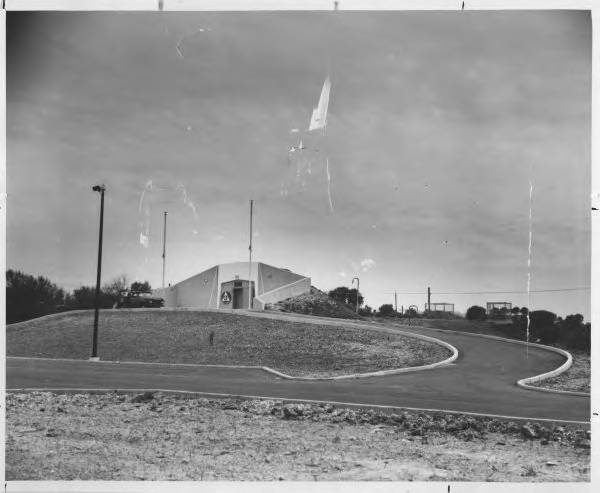
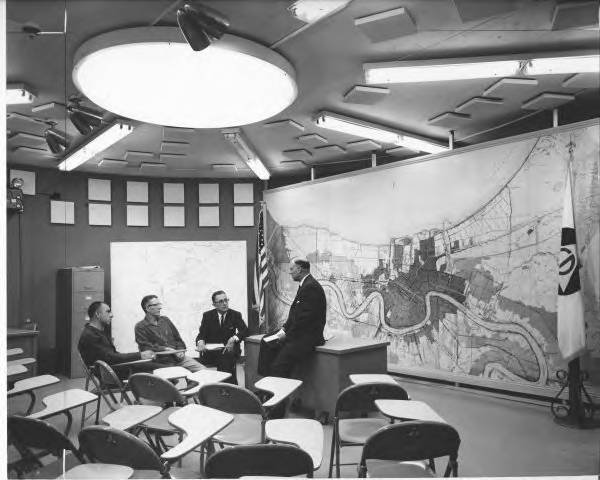
In 1950, the Louisiana Legislature created the Office of Civil Defense, with local headquarters tasked with handling emergency responses to non-military disaster situations including floods and hurricanes. The New Orleans Civil Defense Emergency Operations Center opened on Pontchartrain Blvd in 1962. Because the threat of nuclear attack was at the forefront of emergency operations, the Operation Center was built as a bunker, along with several fallout shelters that were built around the city. The current City Hall and Main Library buildings both have fallout shelter basements beneath them as part of this initiative. 

Interior of the Civil Defense Control Center.

Interior of the Civil Defense Control Center.

Exterior of the Civil Defense Control Center (Bunker) in Lakeview.

The Office of Civil Defense was also in charge of handling weather and natural disasters at the local level. Here, a City employee reviews the Weather Wire during a test of emergency operations in October of 1971. These machines were used to share weather updates from the National Weather Service (then called the U.S. Weather Bureau) in hopes of alerting its audience in time to make necessary preparations. 

Local businesses and news stations also published hurricane tracking maps for the public. These brochures provide storm safety tips and include a map to plot points to track a storm’s progress. See the Archives’ full collection of digitized tracking maps here. 

In the mid-1980s the Office of Civil Defense became the Office of Emergency Management. The current iteration of this department is the New Orleans Office of Homeland Security and Emergency Preparedness (NOHSEP). A huge component of emergency preparedness is public engagement. Communication with the public and other agencies is vital for disaster mitigation and response. In the years following Hurricane Katrina, the City of New Orleans formed NOLA Ready as a branch of NOHSEP to serve as the intermediary between the City and its residents before, during, and after a disaster. Visit ready.nola.gov to sign up for updates and review the City’s guidelines for emergency preparedness.

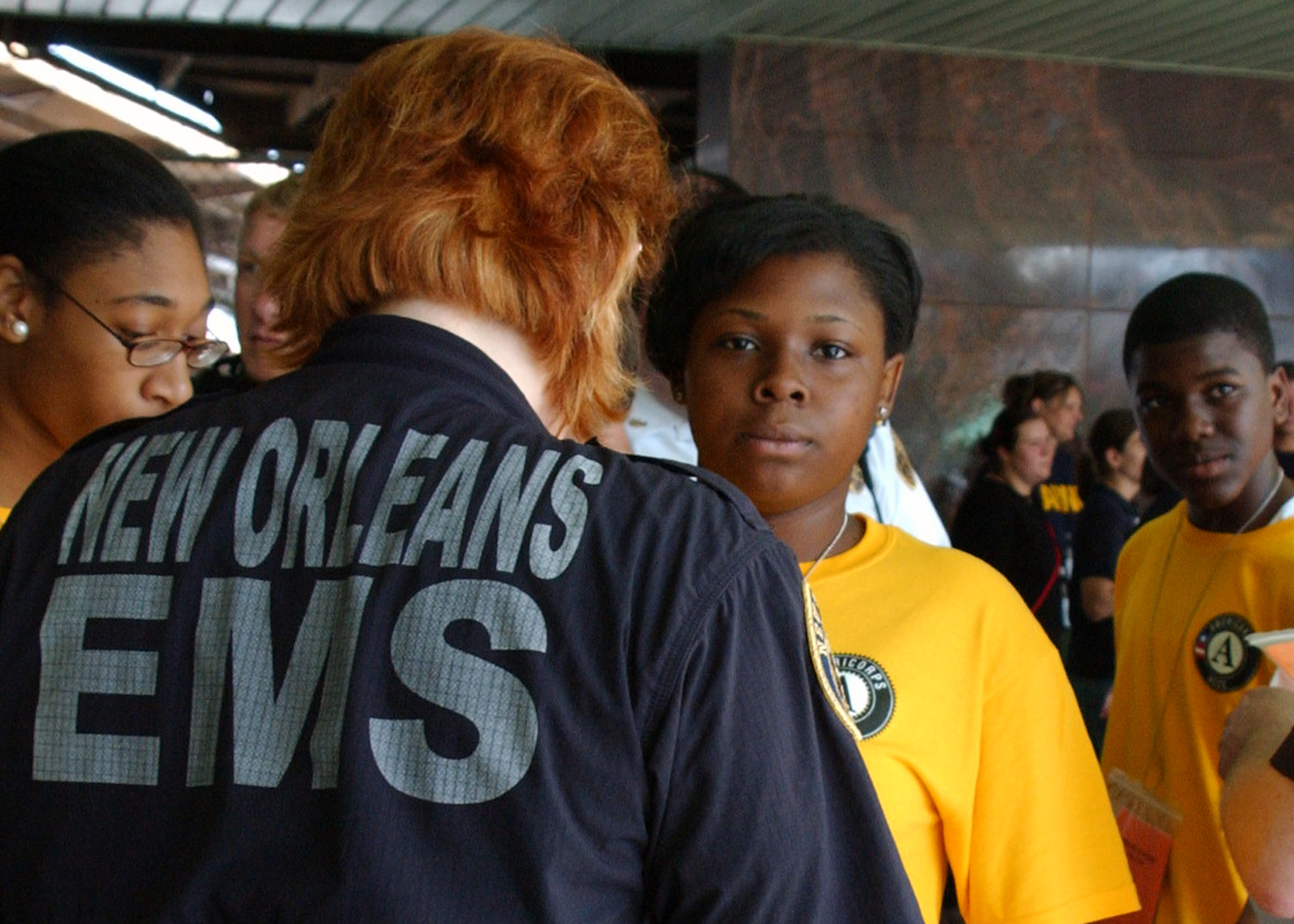
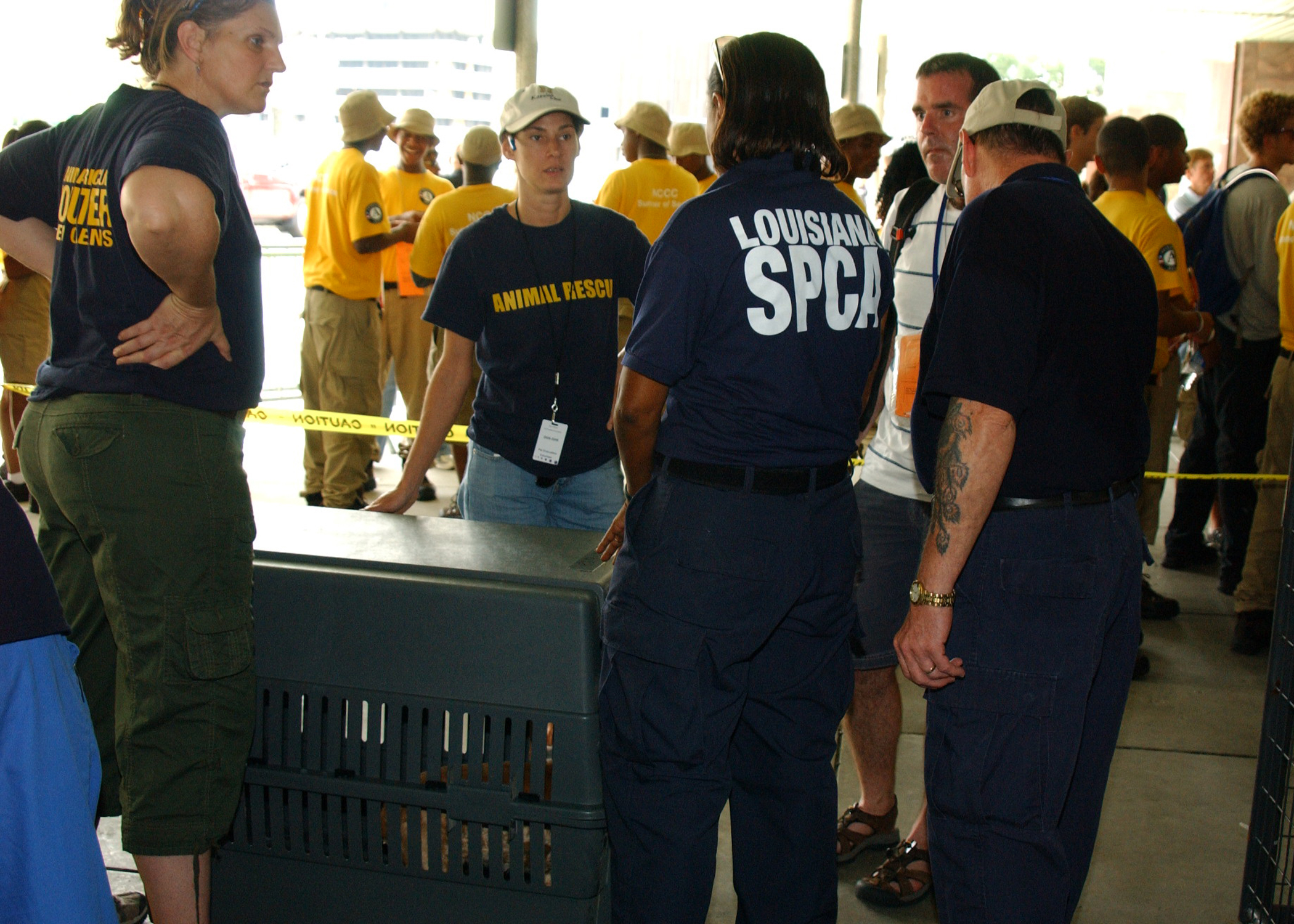
Hurricane evacuation drill, 2008

Hurricane evacuation drill, 2008

Hurricane evacuation drill, 2008

“Weathering the Storm: Reflecting on New Orleans’ Past” was curated by Amy DeNisco, Amanda Fallis, Andrew Mullins, Brittanny Silva, and Christina Bryant and will be on display through 2025. This digital version was created by Brittanny Silva.

Explore Related Blog Posts

Exit mobile version