
Documenting the Storm
Researching Hurricane Katrina in the City Archives & Special Collections
2025 marks the twentieth anniversary of Hurricane Katrina in New Orleans. To say this storm was devastating to our city and its residents is an understatement. New Orleans, its people, its places, its government, and its culture, will forever be marked by Katrina and its aftermath. Documenting the storm and the City’s response is of crucial importance to understanding the New Orleans of the past and of today. The City Archives & Special Collections has compiled the following resources from our collection relating to Hurricane Katrina, the City’s response, and continued recovery in order to assist our researchers. Included are municipal collections, photographs, recovery plans, progress reports, exhibits, and upcoming programs. Contact the Archives to request an appointment to view non-digital materials.
Research
Hurricane Katrina is documented in both municipal and special collections. Here, the archives presents a list of our archival collections for researchers to consult. Contact the Archives to request an appointment to view collection materials.
Office of the Mayor
Records of Mayor C. Ray Nagin, 2002-2010, include administrative records, planning materials, and records produced by offices under the Mayor. Katrina related materials can be found in multiple series in this collection, including Administrative records and records of the Office of Communication.
City Council
View the City Council minutes, ordinances, and resolutions from 2005 onward on Municode. Official Proceedings from Katrina and recovery time period are available to view in the Archives. Additional Katrina material can be found in the City Council website series.
City Councilmembers
View individual members of City Council by district from 2005 onward in this table of Members of City Council. Click on each councilmember's name to view the finding aid of their collection materials.
Katrina Memorial Exhibit
The New Orleans City Council created a photograph exhibition to commemorate the one year anniversary Hurricane Katrina. This collection contains the planning and administrative records of the exhibit; photographs are not included.
On August 27, 2005, Mayor Nagin issued the following press release urging New Orleanians to prepare for Hurricane Katrina, at that time a category 3 hurricane. As the storm continued to intensify into a category 5 over the next 24 hours, a mandatory evacuation order was issued the morning of August 28. This was the first mandatory evacuation to be ordered for the City of New Orleans. Many were unable to evacuate, and remained in the City as Katrina made landfall on August 29. The subsequent levee failures left 80% of New Orleans under water and ravaged neighborhoods, bringing up to 15 feet of water in some areas. The Times-Picayune published this interactive timeline of the flooding caused by Hurricane Katrina. It took 21 days to drain the City following the storm. Tragically, many lost their lives. The Louisiana Department of Health issued the following report on the deaths related to Hurricane Katrina.
Powered By EmbedPress
Powered By EmbedPress
These were among the first images posted on the City’s website in September following Katrina’s landfall. They show building damage in the CBD, including the Superdome which served as a “refuge of last resort” for New Orleanians unable to evacuate. Amid rising water, roof damage, plumbing and electrical failures, and resource and supply shortages, as the storm progressed the situation became dire for the roughly 20,000 individuals sheltering inside the Superdome. Governor Kathleen Blanco ordered a complete evacuation of the City, including the Superdome, on August 31.


The City urged evacuated residents not to return too early, as conditions in New Orleans were unstable and unsafe. The City began its re-entry plan in late September, allowing residents to return based on their corresponding zip code. The first areas to allow re-entry were Algiers, the CBD, French Quarter, and Uptown. The City published the below “Tips for Re-Entry” to assist residents in their return. By October 5, all residents were allowed to return, with the exception of the Lower Ninth Ward. The Lower Ninth Ward’s devastation prompted the City’s “Look and Leave” policy for parts of the area beginning October 12, 2005. All residents were allowed back in the Lower Ninth Ward by December 1, 2005, still under the restrictions of the “Look and Leave” policy.
Powered By EmbedPress
Powered By EmbedPress
The Nagin Administration published periodic “Situation Reports” documenting the City of New Orleans in the immediate aftermath of Hurricane Katrina through the summer of 2006. These reports provide a detailed picture of the City through access and re-entry guidelines, available city services, updates on electricity, water, schools, and neighborhood updates by zip code. Reports were made available on the (now defunct) city’s website, cityofno.com.
Preparation and response to Hurricane Katrina was heavily criticized at the local, state, and federal levels. Both the House of Representatives and the Senate conducted investigations into Hurricane Katrina, producing the following reports in 2006. The conclusion was that multiple failures occurred at every level of government.
S. Rept. 109-322 - HURRICANE KATRINA: A NATION STILL UNPREPARED
Report from the U.S. Senate
H. Rept. 109-377 - A FAILURE OF INITIATIVE
Report from the U.S. House of Representatives, Select Bipartisan Committee
Additional investigations were conducted reviewing the acts and behavior of the NOPD and the Sheriff’s Department in the aftermath of Hurricane Katrina, all of which gained national attention. On September 4, 2005, NOPD officers shot at six unarmed civilians on the Danzinger Bridge over the Industrial Canal. Two were killed and four wounded. An attempted cover-up of the true details of the shooting followed. Officers were prosecuted by the U.S. Department of Justice and found guilty. In 2010 the Department of Justice began an investigation into police misconduct and civil rights violations within the NOPD. They issued the following report of their findings, prompting the 2012 Consent Decree, which the NOPD is still under today. The report does not address the actions of the NOPD during Hurricane Katrina, but it does address unconstitutional use of force. In December of 2016, New Orleans Mayor Mitch Landrieu announced that the City had reached a settlement of civil rights lawsuits stemming from NOPD actions during Hurricane Katrina. The three federal lawsuits involved 17 claimants, including the victims’ families and survivors of the Danzinger Bridge shootings.
The Sheriff’s Department, which operates the Orleans Parish Prison (OPP), was also heavily criticized for their actions during Hurricane Katrina. Reports of stalled evacuations, deputies abandoning posts, and inmates locked in cells amid rising flood waters with no food, water, or electricity circulated the national news media. Many inmates were eventually evacuated to Angola, the Louisiana State Penitentiary. The September/October issue of the prison’s news magazine, The Angolite, includes a story on the evacuated OPP inmates that were brought to Angola. Read the full issue by clicking the image. Contact the Archives to view our full collection of The Angolite, or access copies online through JSTOR.
In 2006, the ACLU’s National Prison Project released Abandoned & Abused: Orleans Parish Prisoners in the Wake of Hurricane Katrina documenting the experiences of incarcerated individuals at OPP in the days leading up to and immediately following Hurricane Katrina. The ACLU has collected testimonials from inmates incarcerated at OPP during Katrina and made them available on their website. Much of the report contradicts Sheriff Marlin Gusman’s public statements regarding conditions at OPP during and after Hurricane Katrina. In 2009, the Department of Justice issued a report on the post-Katrina conditions in OPP, and in 2012 the Orleans Parish Prison was also placed under a federal consent decree. The consent decree remained in place today through 2025.


News media played a huge role in the dissemination of information during and after Hurricane Katrina. New Orleans gained national media attention throughout the storm and its aftermath. While many New Orleans residents remained evacuated, print, digital, radio, and TV news media became a lifeline between displaced residents and the City. Researchers should consult the Times-Picayune digital edition for access to newspaper coverage of Hurricane Katrina and its aftermath. The Times-Picayune won a Pulitzer Prize in 2006 for their reporting on Katrina.
Progress and Recovery
Following the storm, several recovery plans were proposed at the city, state, and federal levels. Some were long-term, some short-term, and many at odds with one another. Mayor Nagin formed the Bring New Orleans Back Commission a month after the storm in 2005. The commission worked with the Urban Land Institute to develop a recovery plan for the city that suggested shrinking the footprint of New Orleans and included the infamous “Green Dot Map” depicting once residential areas that had been flooded as future greenspace. Simultaneously, the City Council backed Lambert Plan was being developed. This plan took a neighborhood approach, dividing the city into multiple zones and districts, meeting with residents to discuss recovery needs. The State backed Long Term Recovery Plan was introduced in 2006, invoking FEMA’s Emergency Support Function (ESF) 14. Finally, the Unified New Orleans Plan was adopted as the official citywide recovery plan and was enacted in early 2007. Overviews of the plans are available below. Contact the Archives to view full versions of each plan with attachments.
Bring New Orleans Back Plan
Plan proposed by the Office of the Mayor
Lambert Plan
Plan proposed by the City Council, compiled by Lambert Advisory; also called the Neighborhoods Rebuilding Plan
Longterm Community Recovery Plan
Plan proposed by the State of Louisiana, also referred to as ESF14
Unified New Orleans Plan
The official citywide recovery plan adopted and supported by the Office of the Mayor, City Council, the State, and FEMA.
Ray Nagin was re-elected mayor in April of 2006 and quickly formed the One New Orleans Committee to develop a 100 Day Initiative Plan to address the immediate needs of New Orleanians, including housing and debris removal. The following presentation was given on August 24, 2006, and the Citizens Recovery Update was provided in September.
Powered By EmbedPress
Powered By EmbedPress
Beginning in 2008, the Office of the Mayor published “Our Recovery in Progress,” a monthly and quarterly progress report to update residents on the City’s implementation of recovery plans. The majority of these reports are available to view digitally. Non-digitized reports are filed in the Archives’ City Documents collection under the call number AA202rp. Contact the Archives to request an appointment to view additional reports.
The Bureau of Government Research (BGR) is an independent, non-profit research organization that examines public policy and government action in New Orleans. In November of 2005, they published the following report urging transparency and public participation in the City’s planning and recovery process.
Post-Katrina BGR reports are available to view on their website. Topics include an examination of the City budget, the move from multiple assessors to just one parish assessor, and the development of the Post Katrina Redevelopment Authority.
The Data Center is another non-profit research organization which published numerous reports and studies of pre and post-Katrina New Orleans. Their Katrina-related data includes impact reports and examinations of changing demographics in the post-Katrina landscape. View the Hurricane Impact: Post Katrina 2005 report and additional Katrina-related information on the Data Center’s website.
Powered By EmbedPress
Photographs
Explore photographs from the Nagin Administration of the aftermath and recovery efforts following Hurricane Katrina.


Flyover images taken by the Sewerage and Water Board showing massive flooding in the Ninth Ward, August 30, 2005.
Katrina and the
New Orleans Public Library
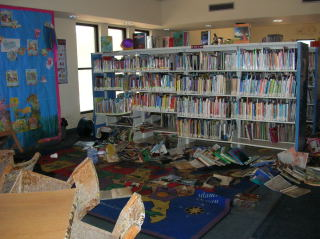
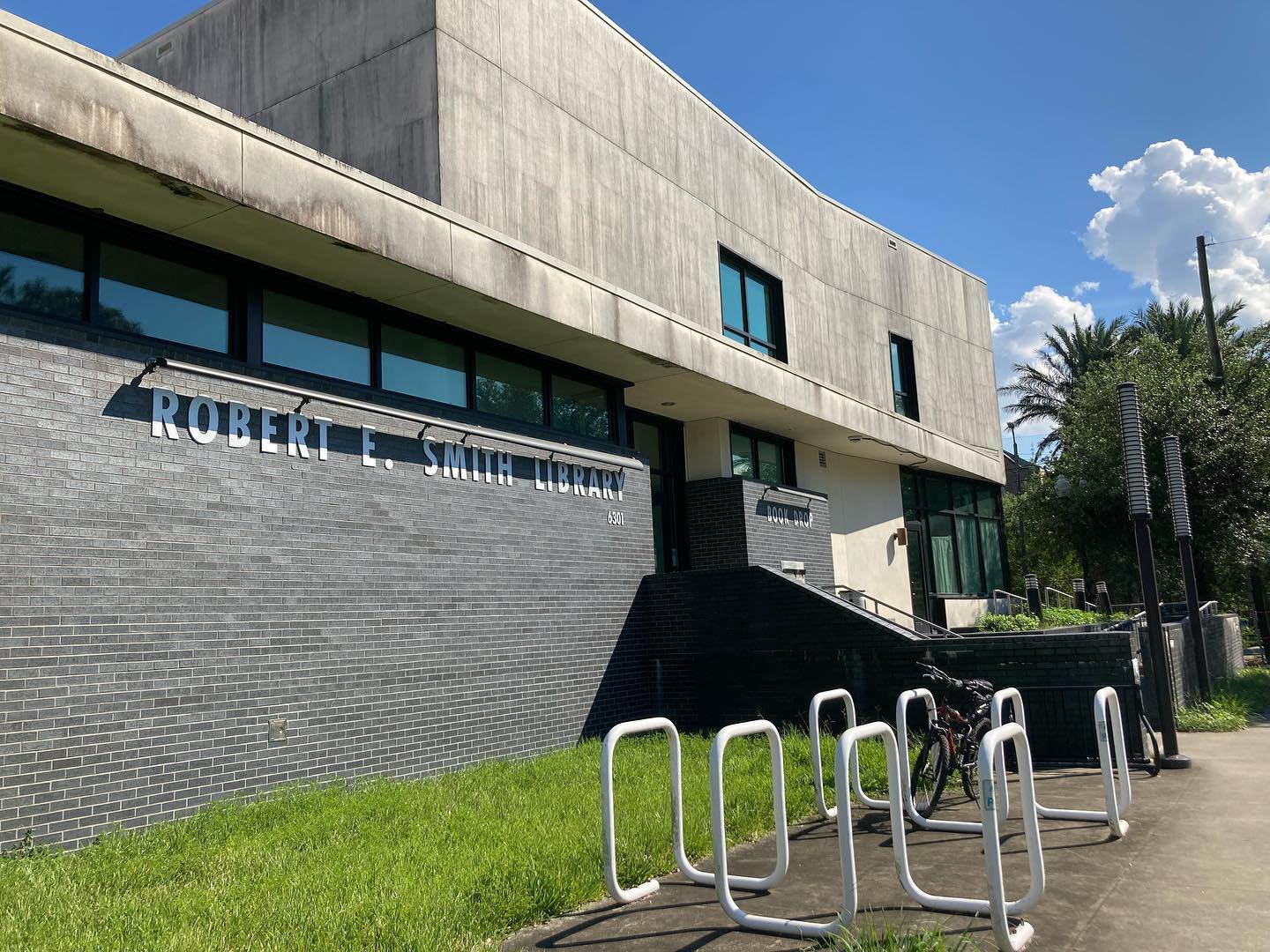
Hurricane Katrina hit New Orleans on August 29, and all Library locations were closed until damage could be assessed and repairs made. Six Library locations were completely destroyed and 90% of staff were laid off. Hubbell, Nix, and the Main Library (including the City Archives & Special Collections) received only minor wind damage and no flooding. They all reopened on October 31. See a full timeline of Library location re-openings following Hurricane Katrina. More information about the records of the New Orleans Public Library can be found in the online finding aid.
Images of hurricane damage and recovery






Looking Forward to a New Chapter:
NOPL Reflects on 20 years of Renewal
Katrina in Print
Explore titles in the City Archives’ reference collection of books related to Katrina and its aftermath. Topics range from environmental factors, social, political, and cultural commentary, emergency response, personal narrative, local, state, and federal response, recovery approaches, infrastructure, and more. Contact the Archives to view these titles.
Katrina on the Screen
Stream documentaries about Hurricane Katrina and its aftermath through Kanopy. A valid New Orleans Public Library card is required for access to Kanopy. Don’t have a library card? Visit any New Orleans Public Library location to sign up for one.

Katrina 20th Anniversary Events
This post was created by Brittanny Silva in 2025.


