Yellow Fever in New Orleans
Throughout the 19th and early 20th centuries, New Orleans was ravaged by outbreaks of yellow fever. The last local outbreak was in 1905, and the first reliable statistics on deaths from the disease date to 1817. What was it like for the people who lived through it? How did the local government respond? How did New Orleans recover? City Archives & Special Collections has materials that may help to answer some of these questions.
Yellow Fever Death Toll
More than 41,000 people died from the scourge of yellow fever in New Orleans between the years 1817 (the first year that reliable statistics are available) and 1905 (the Crescent City’s last epidemic). Yearly fatalities ranged from 1 to 1,000, even surpassing 1,000 deaths in 8 of the 88 years of the fever’s activity.
We often hear from genealogical researchers that their ancestor(s) died in the epidemic of 18__, and that they would like to search the records of that year’s fever season. We know from experience, however, that family tradition or other sources sometimes err in identifying a given year as one of epidemic significance. Our first step is usually to consult George Augustin’s History of Yellow Fever (New Orleans, 1909), a thick volume that chronicles the year-by-year yellow fever numbers for the Crescent City–and for the rest of the world as well.
With the assistance of volunteer Lea Gaines, we have extracted the New Orleans numbers from Augustin’s listings. We offer them here as a quick reference for researchers interested in identifying the fever’s impact on the city in a given year. Augustin did not give a figure for 1905; the total given for this year is from the Biennial Report of the Board of Health of the City of New Orleans, 1904-1905.
For researchers interested in identifying Yellow Fever victims, City Archives & Special Collections offers a number of records. Death certificates, Cemetery interments, Charity Hospital, Hotel Dieu, & Touro Infirmary registers, and records of the Orleans Parish Coroner are all available. For more information on Burial, Hospital, and Vital Records see the Genealogy Guide. For personal accounts of people’s experiences with Yellow Fever, search our Special Collections. For reference books and other historical accounts of the fever search the Library’s online catalog.
| Year | Number of Deaths |
|---|---|
| 1817 | 80 |
| 1818 | 115 |
| 1819 | 2190 |
| 1822 | 237 |
| 1823 | 239 |
| 1824 | 108 |
| 1825 | 49 |
| 1826 | 5 |
| 1827 | 109 |
| 1828 | 150 |
| 1829 | 215 |
| 1830 | 117 |
| 1831 | 2 |
| 1832 | 18 |
| 1833 | 210 |
| 1834 | 95 |
| 1835 | 284 |
| 1836 | 5 |
| 1837 | 412 |
| 1838 | 17 |
| 1839 | 452 |
| 1840 | 3 |
| 1841 | 594 |
| 1842 | 211 |
| 1843 | 487 |
| 1844 | 83 |
| 1845 | 2 |
| 1846 | 146 |
| 1847 | 2306 |
| 1848 | 808 |
| 1849 | 769 |
| 1850 | 107 |
| 1851 | 17 |
| 1852 | 456 |
| 1853 | 7849 |
| 1854 | 2425 |
| 1855 | 2670 |
| 1856 | 74 |
| 1857 | 200 |
| 1858 | 4845 |
| 1859 | 91 |
| 1860 | 15 |
| 1862 | 2 |
| 1863 | 2 |
| 1864 | 6 |
| 1865 | 1 |
| 1866 | 185 |
| 1867 | 3107 |
| 1868 | 5 |
| 1869 | 3 |
| 1870 | 588 |
| 1871 | 54 |
| 1872 | 39 |
| 1873 | 226 |
| 1874 | 17 |
| 1878 | 4046 |
| 1879 | 19 |
| 1880 | 2 |
| 1883 | 1 |
| 1889 | 1 |
| 1897 | 298 |
| 1898 | 57 |
| 1899 | 23 |
| 1905 | 437 |
Experiences
What was it like? There are a few first-hand accounts detailing people’s experiences available in Special Collections and in our Book Collection.
James Emile Armor papers (SC-100-MS): this collection contains a series of letters, and one of the subjects discussed are the yellow fever epidemics of 1837 and 1841.
William A. Crenshaw letters (SC-46-MS): this collection includes typewritten copies of two letters describing the 1841 yellow fever epidemic in New Orleans.
Russell Dorr letter (SC-191-MS): Dorr describes his Mississippi River voyage and mentions the yellow fever outbreak of 1878.
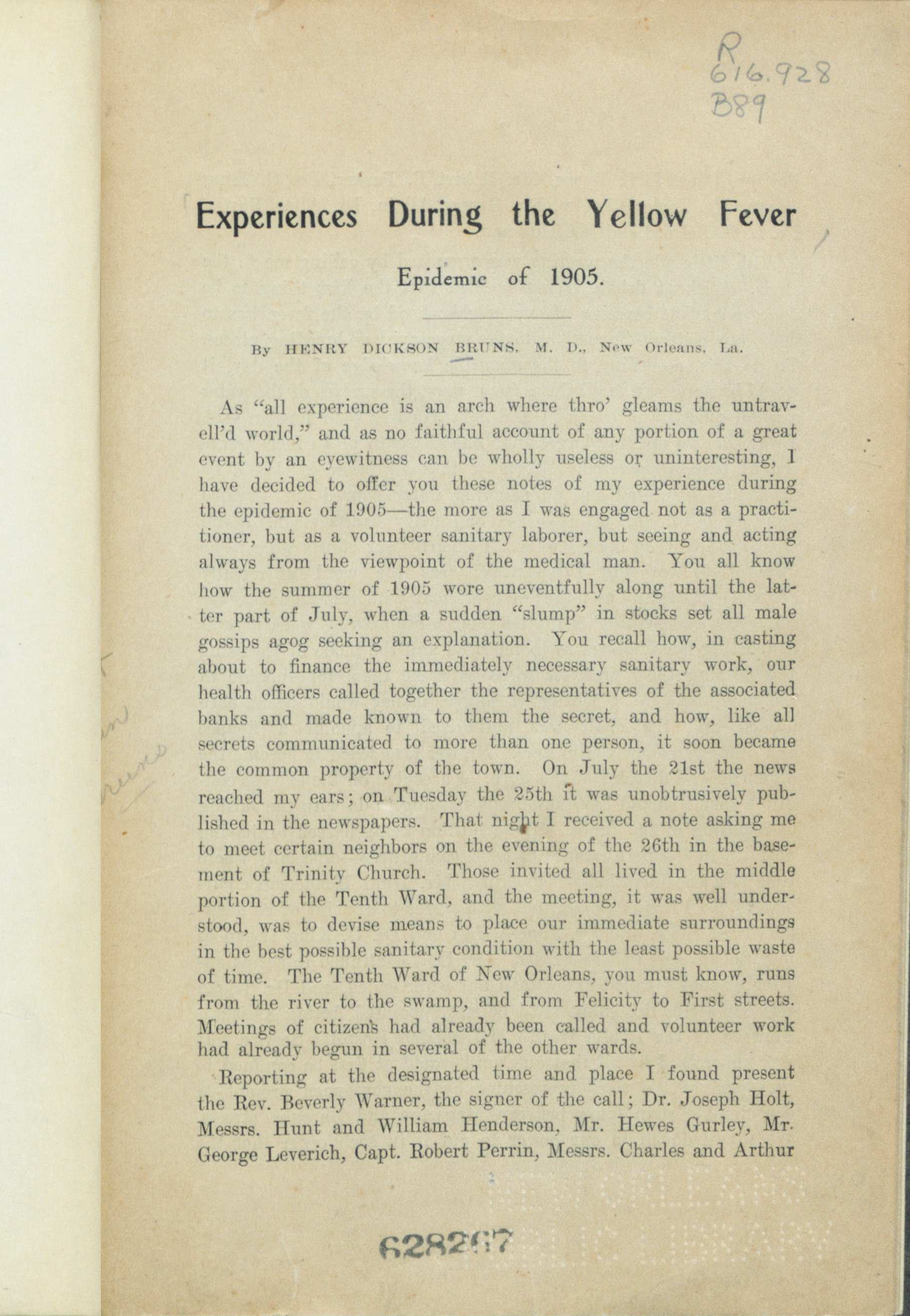
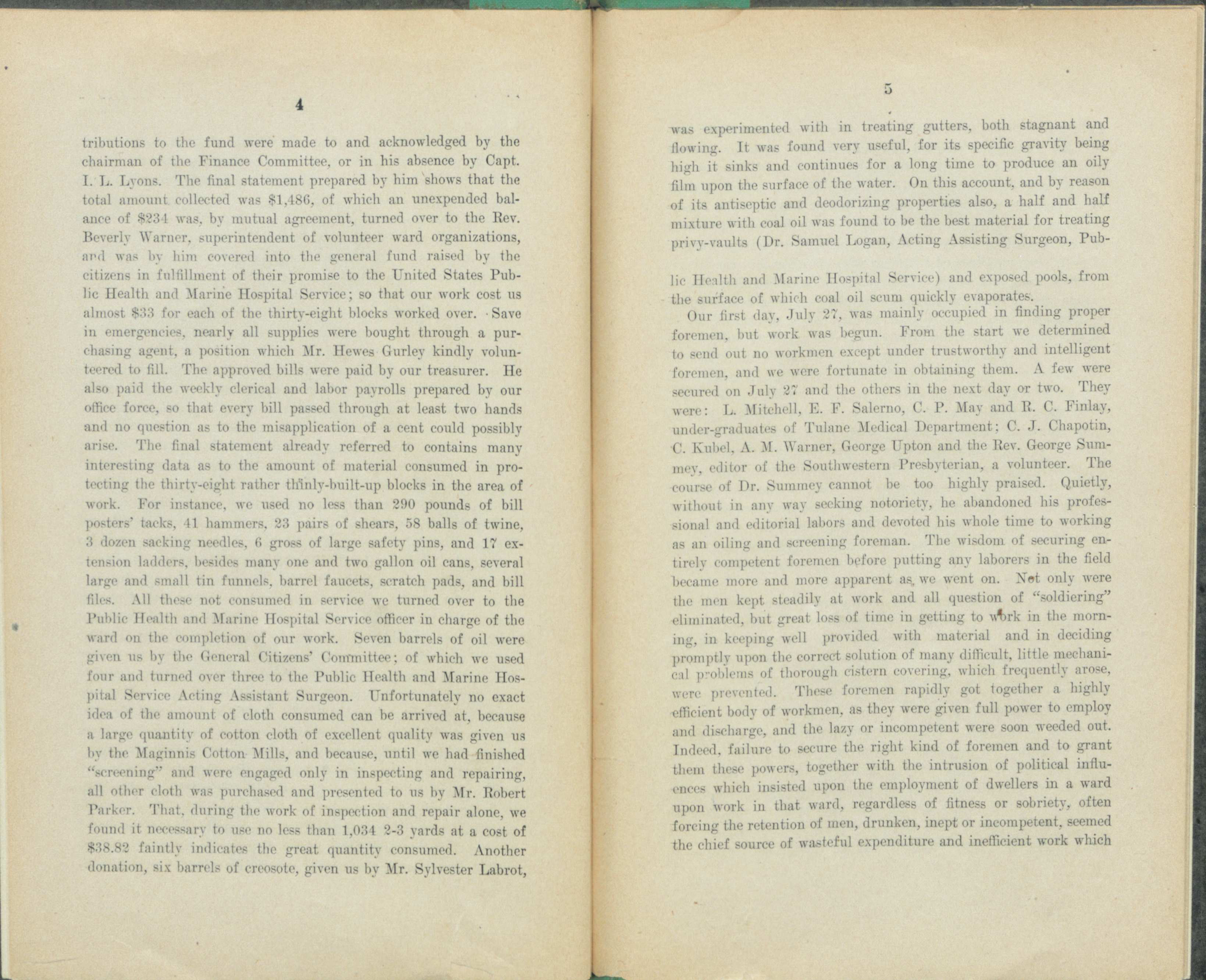
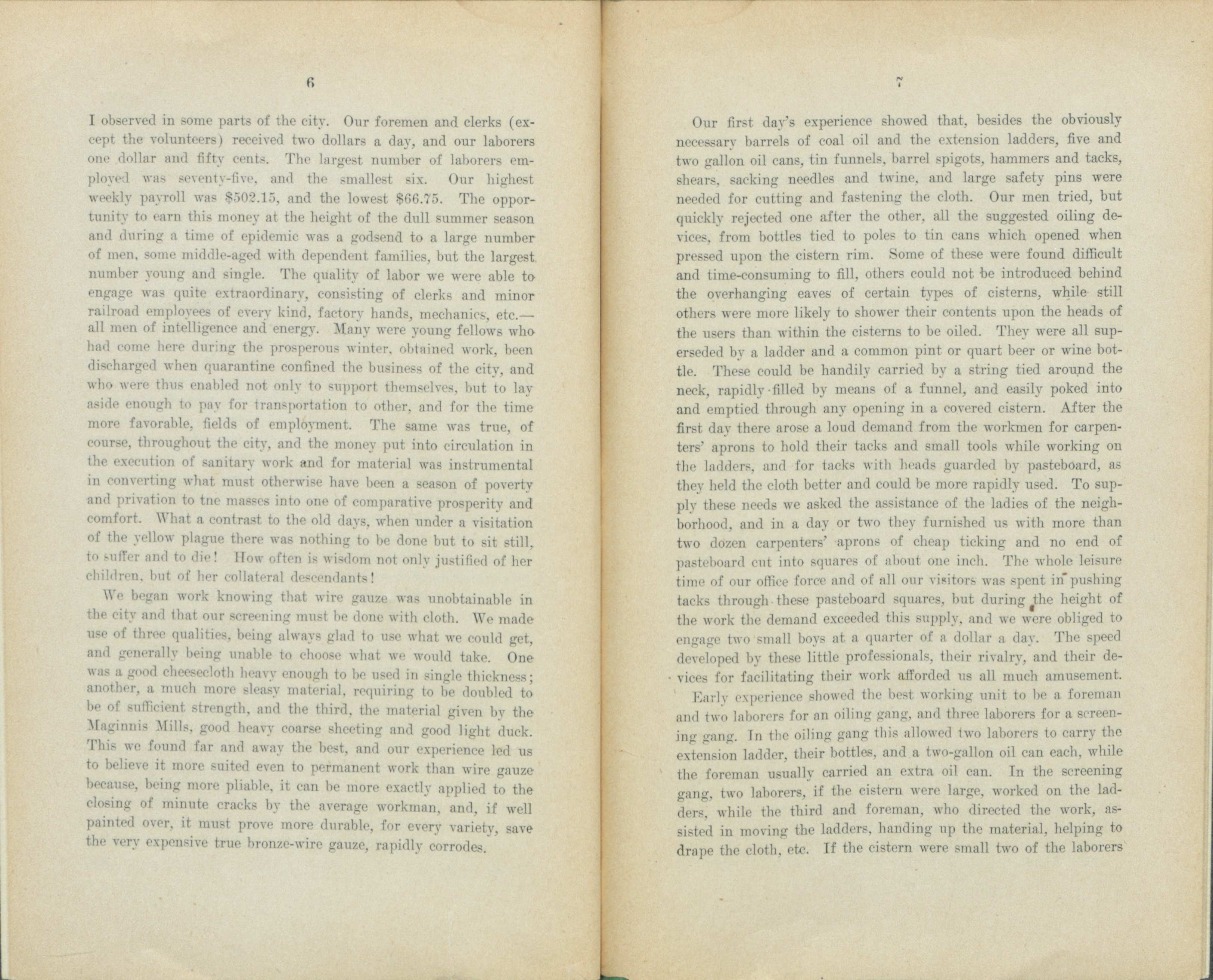
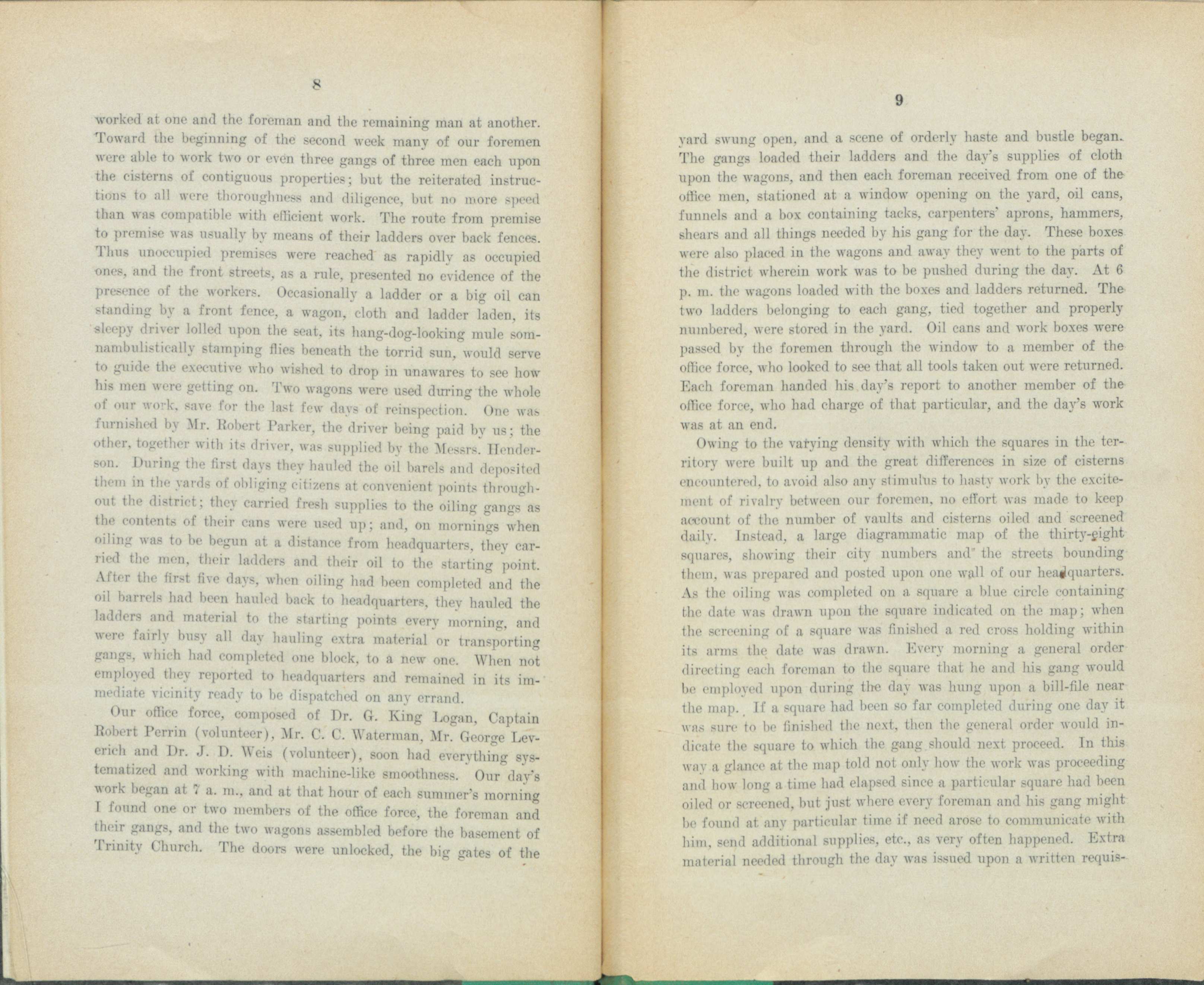
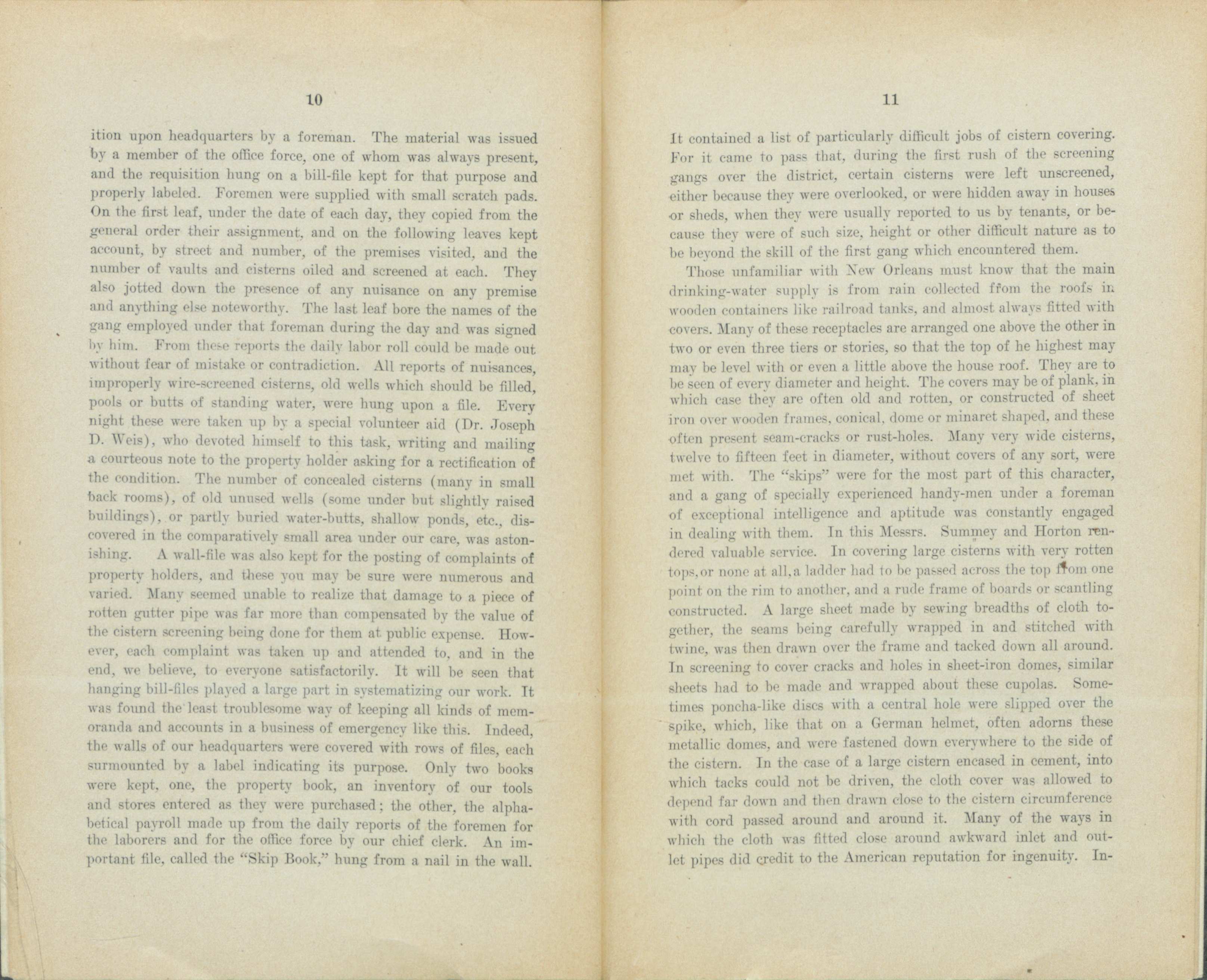
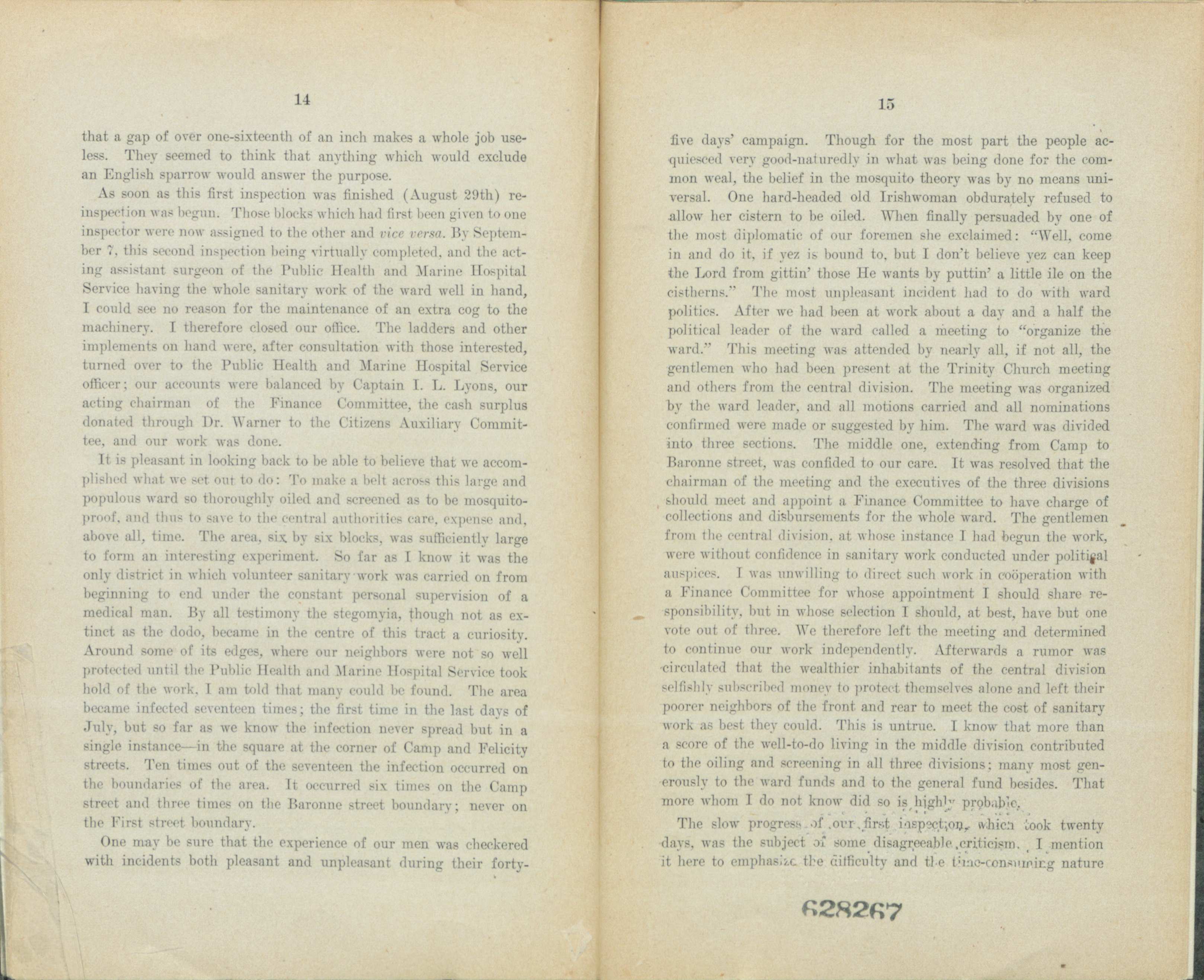
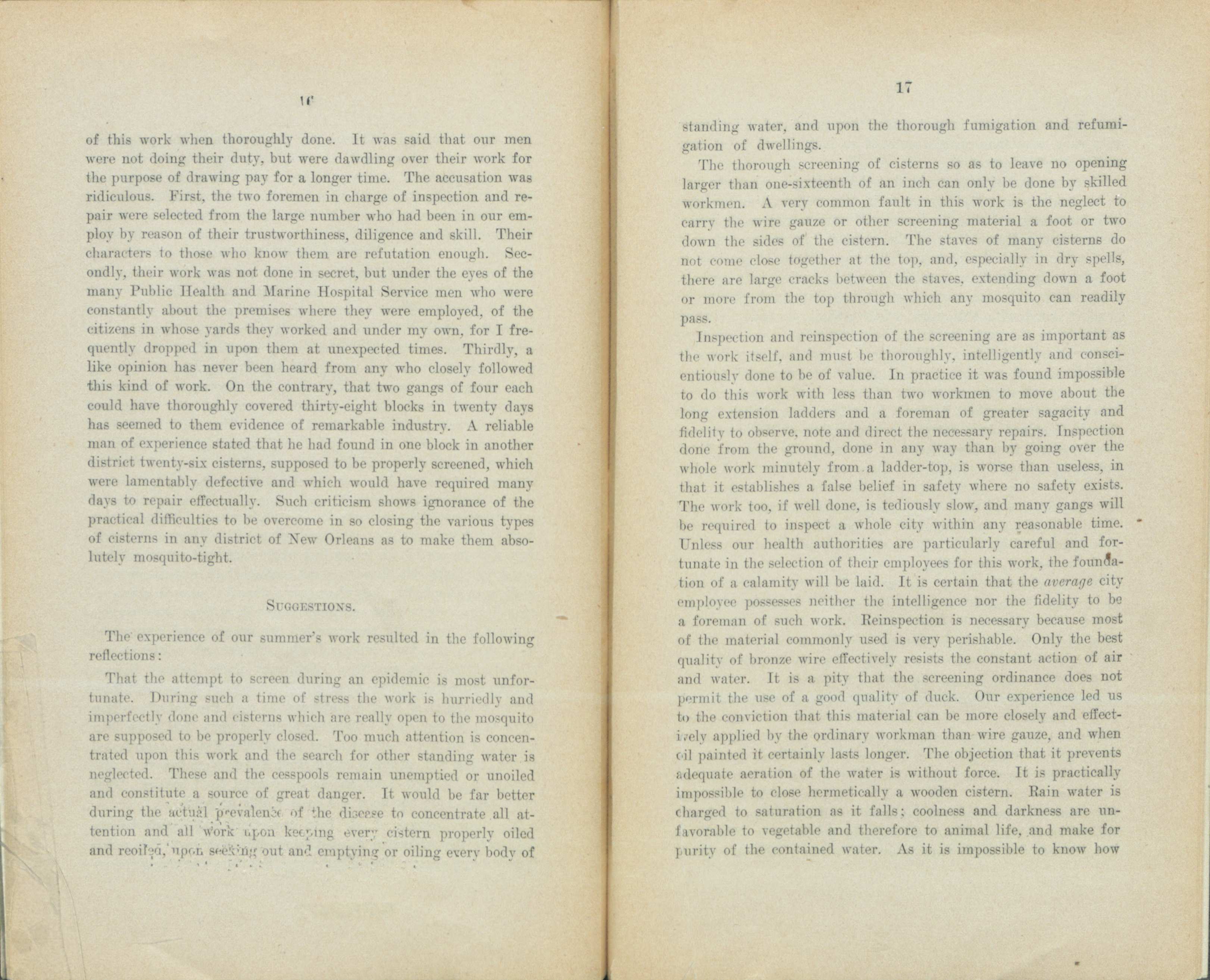
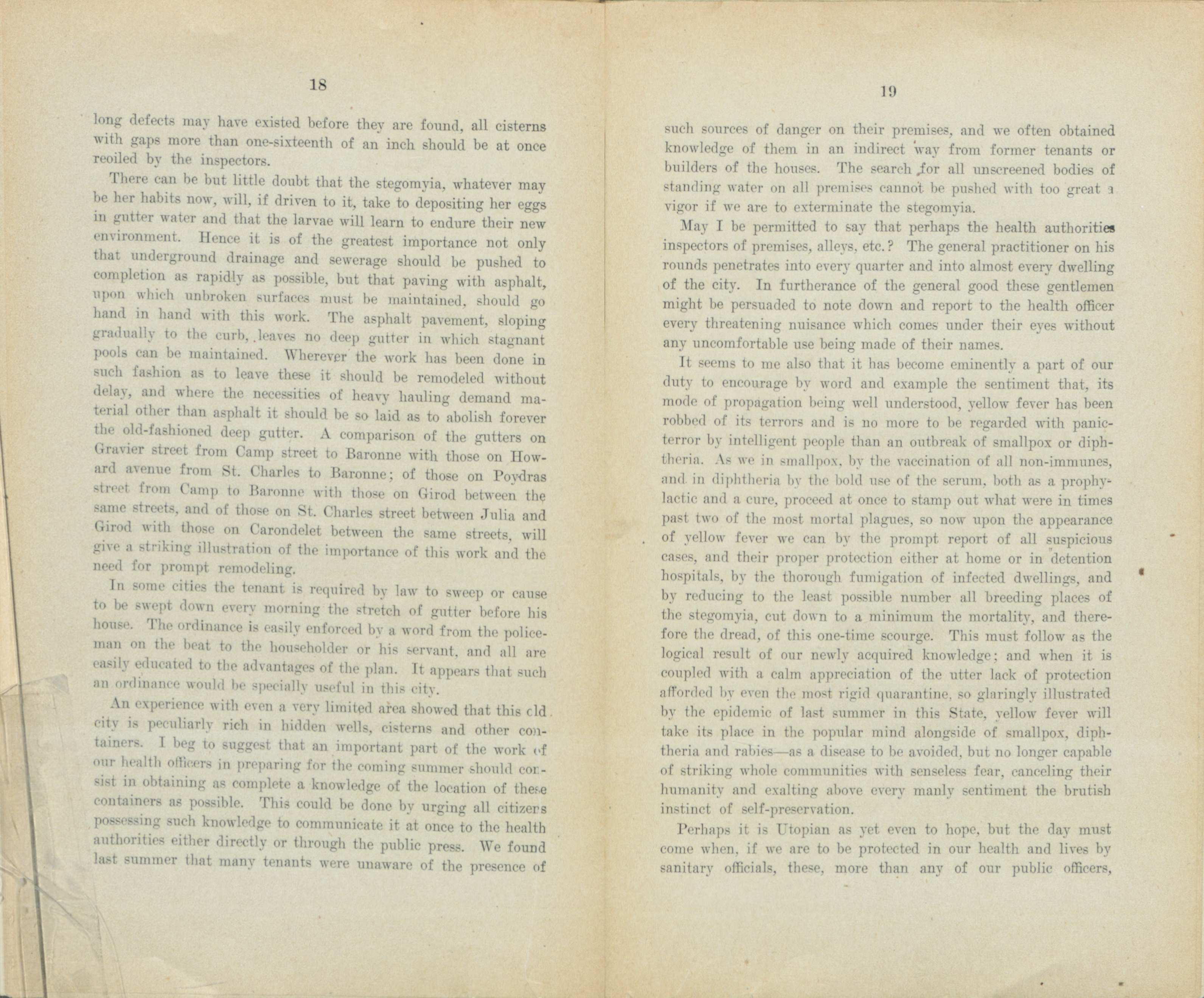
Experiences during the yellow fever epidemic of 1905 (LOUR 616.928 B89): Dr. Henry Dickson Bruns describes his work volunteering as sanitary laborer during the summer of 1905.
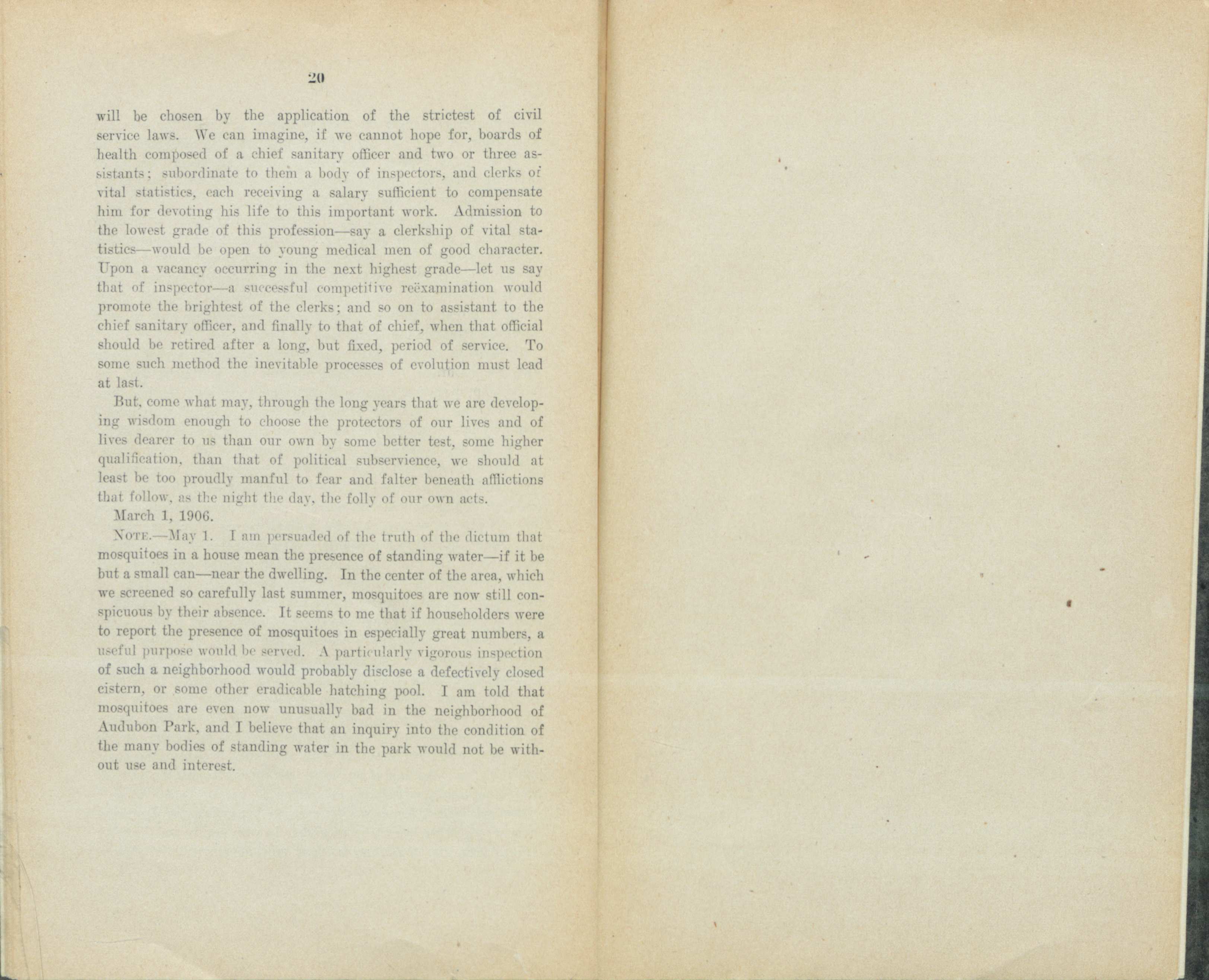
To the people of New Orleans (LOUR 616.928 H73t): Joseph Holt offers a scathing critique of the city’s response to yellow fever in 1905.
These records are available to in-person researchers; please schedule an appointment to view them.
How did people respond? Some organizations added new missions in response to the epidemic; evidence of this can also be found in Special Collections.
Non-Municipal Cemetery Records (SC-Cemeteries): Large death tolls necessitated the creation of new cemeteries such as Greenwood and St. Patrick Cemetery.
L’Union Francaise (SC-265-MS): Although originally formed to preserve the French language in New Orleans, the group also offered aid to individuals suffering from Yellow Fever.
These records are available to in-person researchers; please schedule an appointment to view them.
Newspaper Accounts and Advertisements
Government Responses
How did the government respond? Records of the municipal response can be found in City Archives collections such as these.
City Ordinances (CA-AB): Titles and brief descriptions of city ordinances may be searched online, and then the specific ordinance may be viewed in person on microfilm machines.
Mayor Martin Behrman records (CA-AA-Behrman): There is a whole file devoted to the Board of Health and the 1905 epidemic.
Drainage and Water Works records (CA-LK): To combat persistent issues like flooding and yellow fever, rather than relying solely on property owners to do as they had in the past, the city took responsibility for managing drainage.
New Orleans Health Department records (CA-FF): While City Archives & Special Collections does not hold records directly about the response to yellow fever, it does hold annual and monthly reports detailing deaths as well as reports from other agencies within the Health Department that dealt with infectious diseases such as the City Smallpox Hospital and Bureau of Tuberculosis Control.
These records are available to in-person researchers; please schedule an appointment to view them.
Mosquitos
By 1905 the New Orleans Health Department had identified mosquitos as the the main culprits in the spread of Yellow Fever.
Dr. Quitman Kohnke, the head of the New Orleans health board, beseeched the city to address the mosquito issue. “Even if you are not positive that the mosquito is the only source of the transmission of yellow fever,” he told physicians, “give your city the benefit of the doubt in this important and vital matter.”
Cisterns, where most of the City’s drinking water came from, provided a perfect breeding ground. By August, with the encouragement of the Health Department and the cooperation of City Council and the Mayor, Ordinance 3196 NCS (see below) was passed, that required the treatment, covering and draining of cisterns and other sitting bodies of water. The ordinance gave the Health Department the authority to inspect private property for non-compliance and recommend punishment such as fines and Jail Time.
Ordinances
Search the Synopsis of Ordinances for citations of laws passed in New Orleans to halt the spread of Yellow Fever. While there are only a few ordinances that specifically cite Yellow Fever in their synopsis, many of the laws under the headings of ‘Cisterns’ and ‘Health Laws’ were at least partially in response to Yellow Fever. Once you have identified an ordinance of interest, archives staff can help you locate the original text of the ordinance.
While the covering of all cisterns had been required since the passage of ordinance 6022 AS in 1879 as a general health law, it was not until the 20th century when health officials made the connection to mosquitos that the covering of cisterns to prevent the spread of mosquito-born illnesses became law in New Orleans.
Ordinance 3196 NCS of August 5, 1905
- Outlined how to prevent mosquito breeding in standing water including cisterns
- Required a layer of oil to be poured over standing water in cisterns
- Required a lid to be placed on all cisterns
- Required mesh to cover all gaps on cistern lids
- Gave the Health Department powers to treat water that was not being taken care of properly
- Imposed Punishment of 25.00 fine or/and no more than 30 days in jail
- Ordinance as revised on September 27, 1905 as 3277 NCS, explicitly requiring the use of kerosine as the oil to cover standing water
- After that revision the language was left unchanged until 2016
Education
Education became a key component of the Health Department’s fight. Taking out ads in the paper, giving talks and speaking to homeowners. As a result of education and action, the epidemic broke and the 1905 outbreak in New Orleans was the last Yellow Fever outbreak in the United States.
Other Epidemics
Yellow Fever was brutal, but it is not the only epidemic that New Orleans has faced. Cholera, Smallpox and Spanish Flu both exacted their toll on the city through the 19th and early 20th centuries.
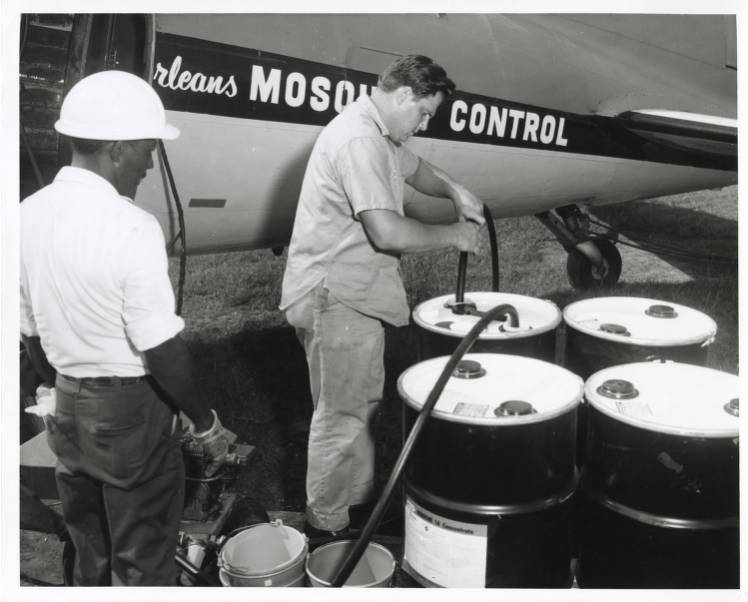
Although Yellow Fever does not pose the threat it once did, the Health Department maintains the Mosquito, Termite and Rodent Control Board to fight against other Mosquito-born illnesses like West Nile Virus.
Other diseases in the 20th century that required intervention in New Orleans from local and federal health agencies include Tuberculosis, Polio, and Syphilis.
More recently New Orleans has also fought against flu viruses as well as COVID-19.
Venereal Disease Control Project
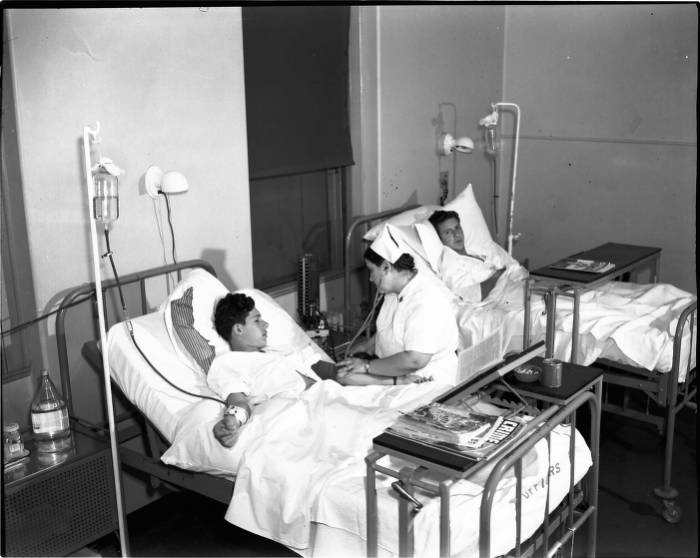
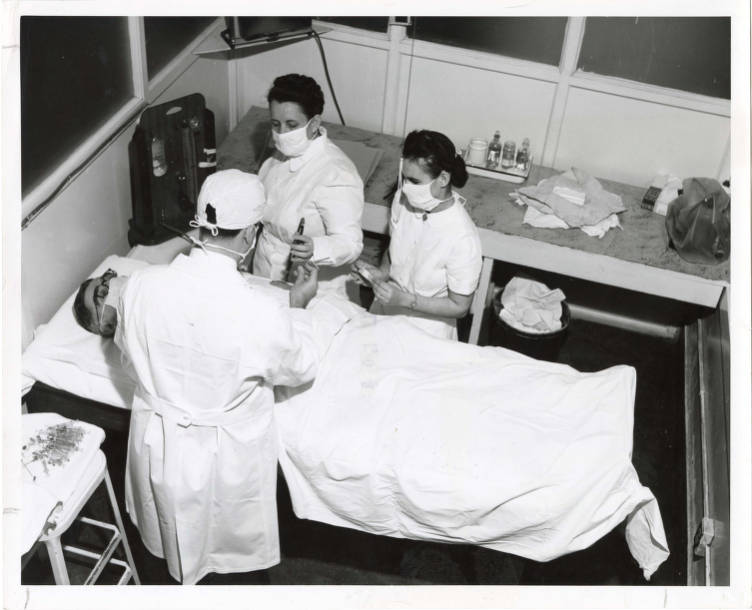
The massive drip treatment for syphilis, the object of lengthy research by doctors of the U.S. Public Health Service, may be the answer to America's venereal disease control problem. These photographs show various operations in the treatment. Doctors of the Marine Hospital are assisted by technicians and nurses employed by the WPA. Interior.
Epidemics in City Archives & Special Collections:
Lumsden, L. L. A survey of tuberculosis in Louisiana. (LOUR 616.246 L95), 1935.
Laws and ordinances relating to health and sanitation of the city of New Orleans (FF311 1908hs). New Orleans: Brandao Printing Co., 1908.
Willoughby, Urmi Engineer. Yellow fever, race, and ecology in nineteenth-century New Orleans (LOUR 614.541 W739y). Baton Rouge: Louisiana State University Press, 2017.
Health-Related Photograph Collections in City Archives & Special Collections:
Additional Reading on Epidemics:
“Careless of Cholera”: The New Orleans Outbreak of 1848. Pitot House, New Orleans: 2020.
Kelley, Laura D. Yellow Fever in Louisiana. 64 Parishes, 2021.
Neidenbach, Elizabeth Clark. Cholera in Louisiana. 64 Parishes, 2023.
Part of the text in this post previously appeared as a Fact Finders post in January 2003 by Wayne Everard. Reformatted and expanded by Christina Bryant and Amy DeNisco in 2025.