Watching America Grow: New Orleans Celebrates the 250th Birthday of America explores the city’s unique role in the American story, beginning long before the founding of the United States. Through documents, photographs, artifacts, and commemorative materials from the collections of the New Orleans City Archives & Special Collections, the exhibition highlights how New Orleans has witnessed and shaped 250 years of American history. As a cornerstone of the nation’s development, New Orleans has helped shape what makes America distinctive while maintaining an identity all its own. Discover the stories and milestones that connect local history to the broader American experience and reveal the city’s enduring role in the nation’s past. 

A physical version of this exhibit is now on display at the Archives.

The Louisiana Purchase

The Louisiana Purchase didn’t just double the size of America, it brought New Orleans into the new nation in 1803.

The Louisiana Purchase Sesquicentennial (150th) Anniversary was celebrated in 1953 featuring a visit from President Eisenhower, a reenactment of the signing of the original document, an exhibit at the State Museum, and a parade.

Hover over the images below to learn more about each image.

Invitation

Invitation to Louisiana Purchase Sesquicentennial Ceremonies.

Vertical File. Louisiana Purchase, 1953.

Invitation

Reenactment

President Eisenhower signs a replica of the Louisiana Purchase transfer document while Mayor Morrison and French Ambassador Henri Bonnet look on. E. V. Richards, Jr. and Duralde Claiborne (in uniform) assist the President. Congressman T. Hale Boggs is among the spectators.

Mayor deLesseps S. Morrison Photograph Collection, 1953.

Reenactment

Reenactment

"The French flag is hauled down and "Old Glory" hoisted in a stirring reenactment of the Louisiana Purchase. The re-enactment in Jackson Square, New Orleans, highlighted a huge sesquicentennial celebration in which President Eisenhower participated. St. Louis Cathedral Looms in the background."

Mayor deLesseps S. Morrison Photograph Collection, 1953.

Reenactment

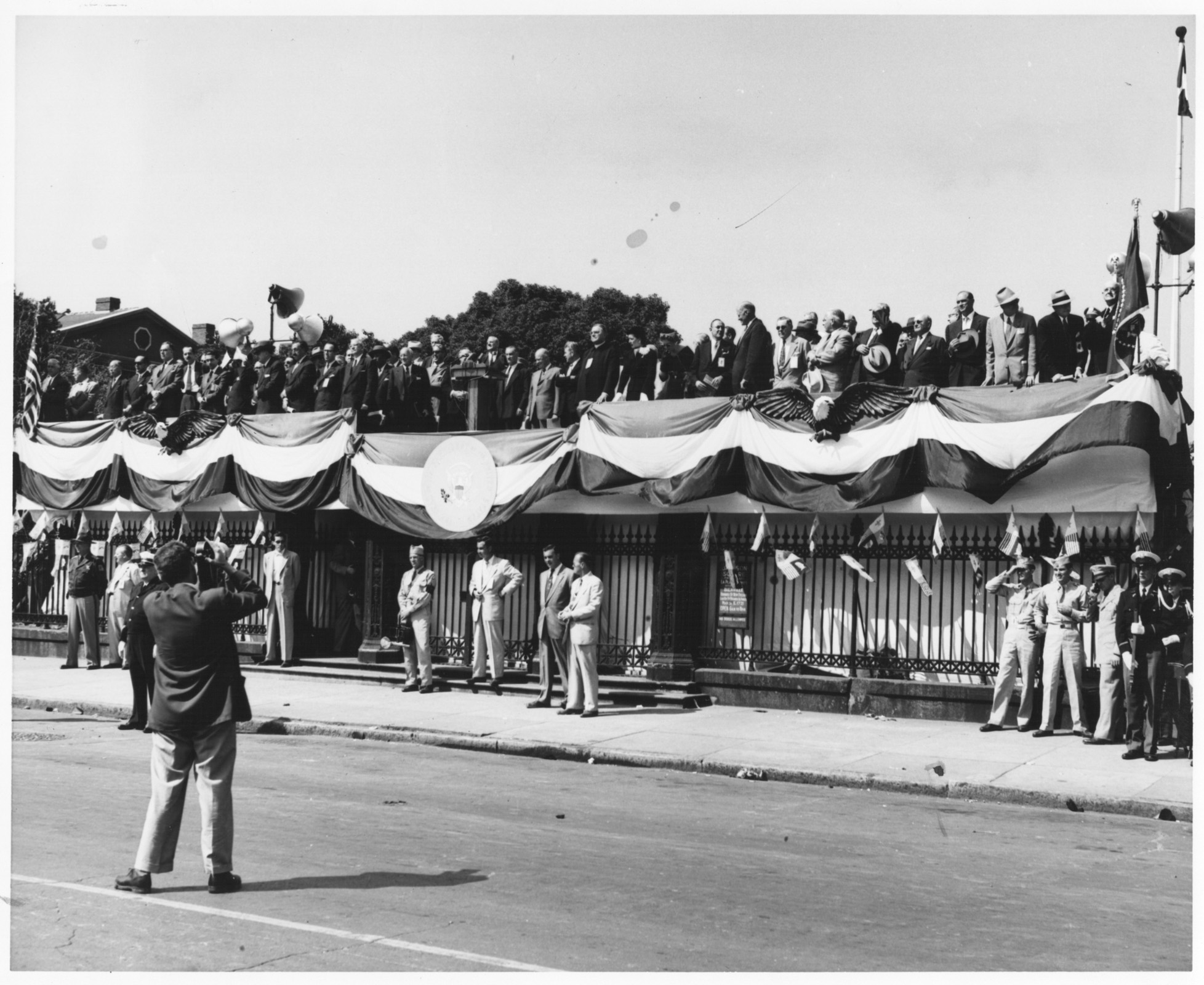
Reviewing Stand

President Eisenhower on the reviewing stand. Mayor Morrison is to the right of the podium. At the far right is Archbishop Joseph Francis Rummel; behind him is Rabbi Emil Leipziger.

Mayor deLesseps S. Morrison Photograph Collection, 1953.

Reviewing Stand

Reviewing Stand

An unidentified photographer snaps a shot of President Eisenhower as he prepares to review the parade in his honor.

Mayor deLesseps S. Morrison Photograph Collection, 1953.

Reviewing Stand

Parade

The Rex-Comus parade passing the reviewing stand in front of Jackson Square. According to the official program of the sesquicentennial celebration this was "the first occasion in history in which the Krewes of Rex and Comus have paraded other than on Mardi Gras Day."

Mayor deLesseps S. Morrison Photograph Collection, 1953.

Parade

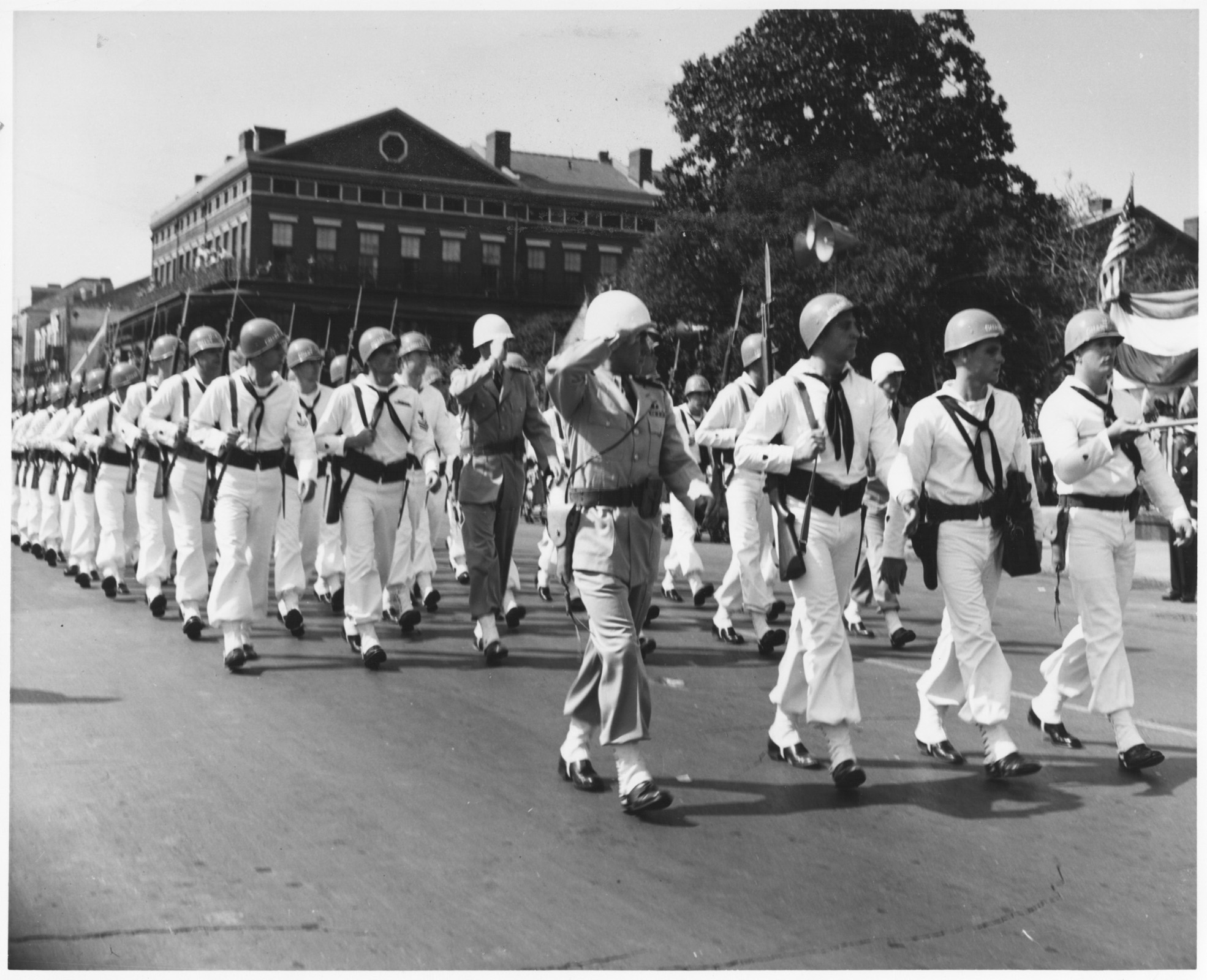
Parade

"The Coast Guard marching corps from the Port Security Unit, New Orleans, passes the reviewing stand of the parade given in honor of President Eisenhower's visit to New Orleans. The President flew to New Orleans in order to participate in the observance of Louisiana's Sesquicentennial."

Mayor deLesseps S. Morrison Photograph Collection, 1953.

Parade

Exhibit

Visitors view a Louisiana Purchase exhibit at the Louisiana State Museum.

Mayor deLesseps S. Morrison Photograph Collection, 1953.

Exhibit

Louisiana Purchase: America’s Best Buy was a common theme for the 1953 Sesquicentennial. Click a pamphlet below to read it.

The Sesquicentennial was celebrated beyond New Orleans, and was featured in national publications, such as this article published in Collier’s on March 21, 1953.

Powered By EmbedPress

1953 was not the first celebration in New Orleans of the Louisiana Purchase. It was marked on the 100th anniversary in 1903 with an event hosted by the Louisiana Historical Society.

The Louisiana Purchase continues to be celebrated in New Orleans with exhibits, conferences, and fundraisers.

The Louisiana Purchase continues to be celebrated in New Orleans with exhibits, conferences, and fundraisers.

Click on an image below to look inside each document.

Powered By EmbedPress

Mr. Jefferson Buys a Piece of Property Exhibit

Mr. Jefferson Buys a Piece of Property Exhibit

Vertical File. Bicentennial, Louisiana Purchase, 2003.

Louisiana Purchase Documents Exhibit

Louisiana Purchase Documents Exhibit

Vertical File. Louisiana Purchase, 1985.

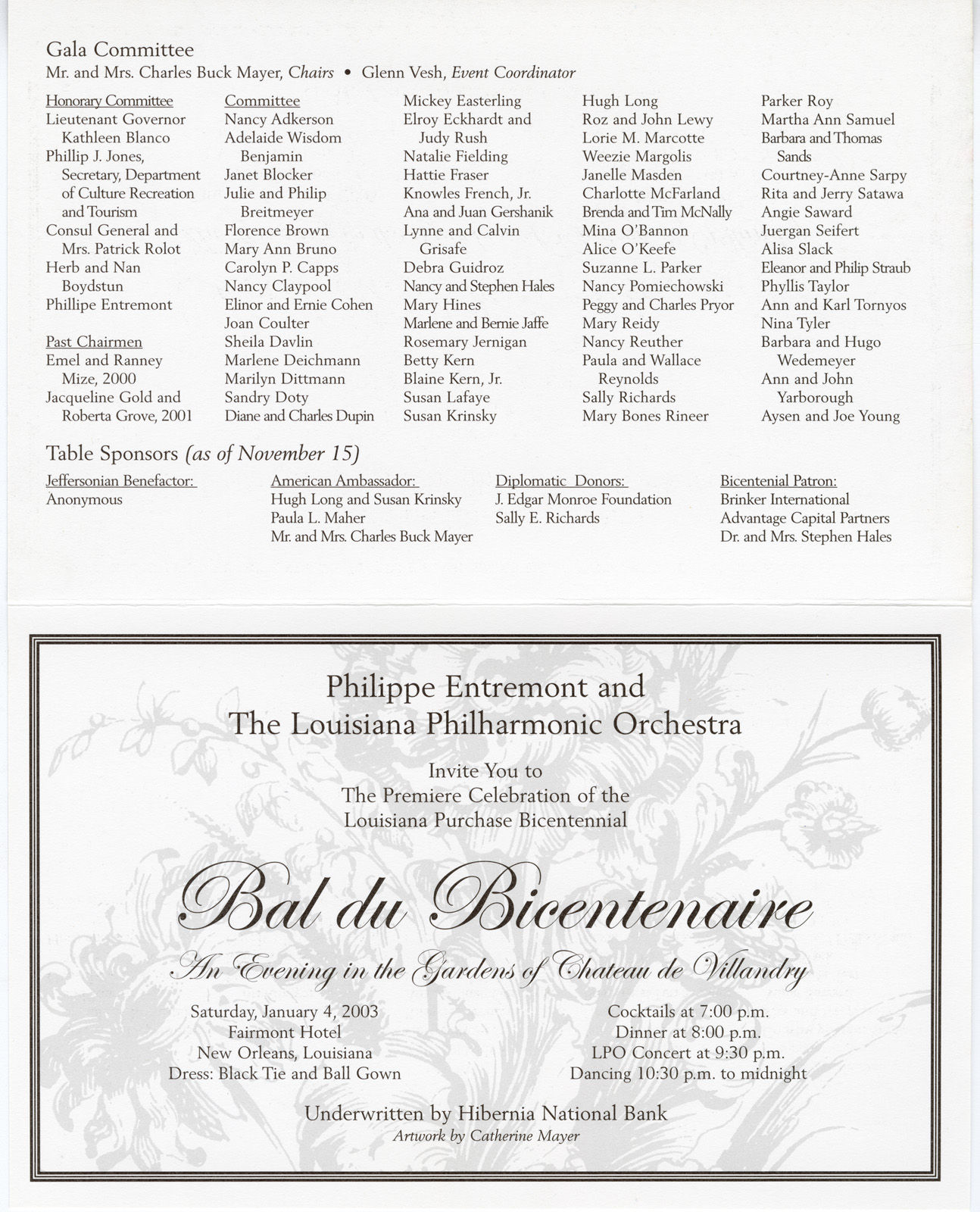
Bal du Bicentenaire

Bal du Bicentenaire

Vertical File. Louisiana Purchase. 2003.

Purchasing Louisiana Conference

Purchasing Louisiana Conference

Vertical File. Louisiana Purchase. 2002.

1976: America's 200th Birthday

The Bicentennial was celebrated across the country, and New Orleans was no exception. Planning for the event began years in advance, as these Bicentennial Bulletins from 1974 and Freedom Talk ’76 from 1975 demonstrate.

Click on a newsletter to read it.

Committees were formed to plan special events during the Bicentennial celebrations. 

Hover over an image to learn more.

Senator Joseph Montoya, Mrs. Myldred Masson Costa, and Commission Administrator John Warner

New Mexico Senator Joseph Montoya, Mrs. Myldred Masson Costa, and Commission Administrator John Warner at the American Revolution Bicentennial Commission, 1976.

Mayor Moon Landrieu Photograph Collection, 1976.

Senator Joseph Montoya, Mrs. Myldred Masson Costa, and Commission Administrator John Warner

Bicentennial, U.S.

Verna Landrieu, Unidentified.

Mayor Ernest N. Morial Photograph Collection.

Bicentennial, U.S.

Bicentennial, U.S.

Gallier Hall.

Mayor Ernest N. Morial Photograph Collection.

Bicentennial, U.S.

Bicentennial, U.S.

Unidentified, James A. Moreau, Verna Landrieu. Gallier Hall.

Mayor Ernest N. Morial Photograph Collection.

Bicentennial, U.S.

Brochures were published advertising events in New Orleans and “Right Around Home”

Click on a brochure to read it.

The state sold Bicentennial Medallions, local museums hosted exhibits, the City hosted a town hall meeting, and even a local golf tournament honored the 200th anniversary

Hover over an image to learn more.

Bicentennial Medallion

Medallion order form.

Vertical File. Bicentennial, Louisiana, 1973.

Bicentennial Medallion

Bicentennial Medallion

Medallion order form.

Vertical File. Bicentennial, Louisiana, 1973.

Bicentennial Medallion

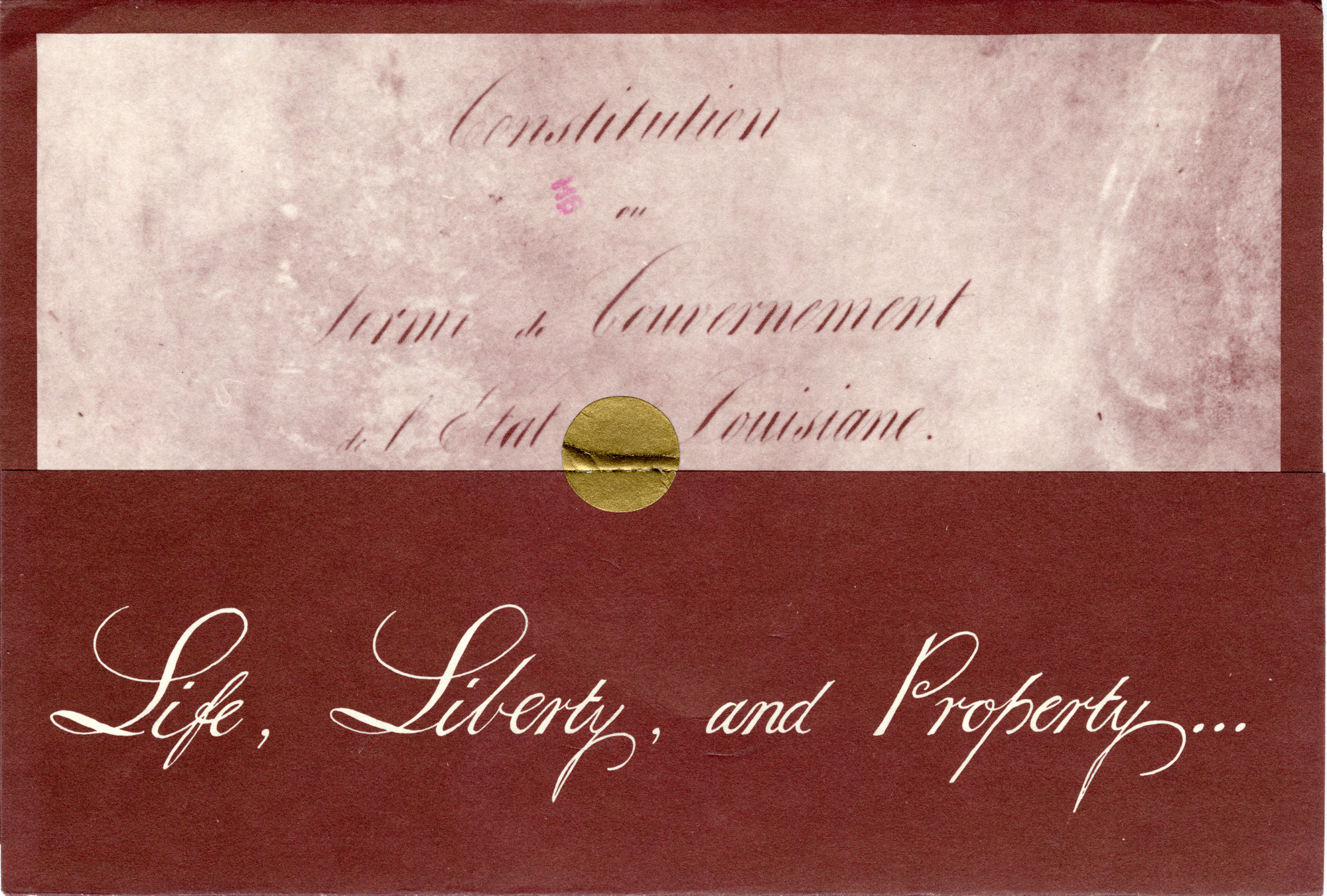
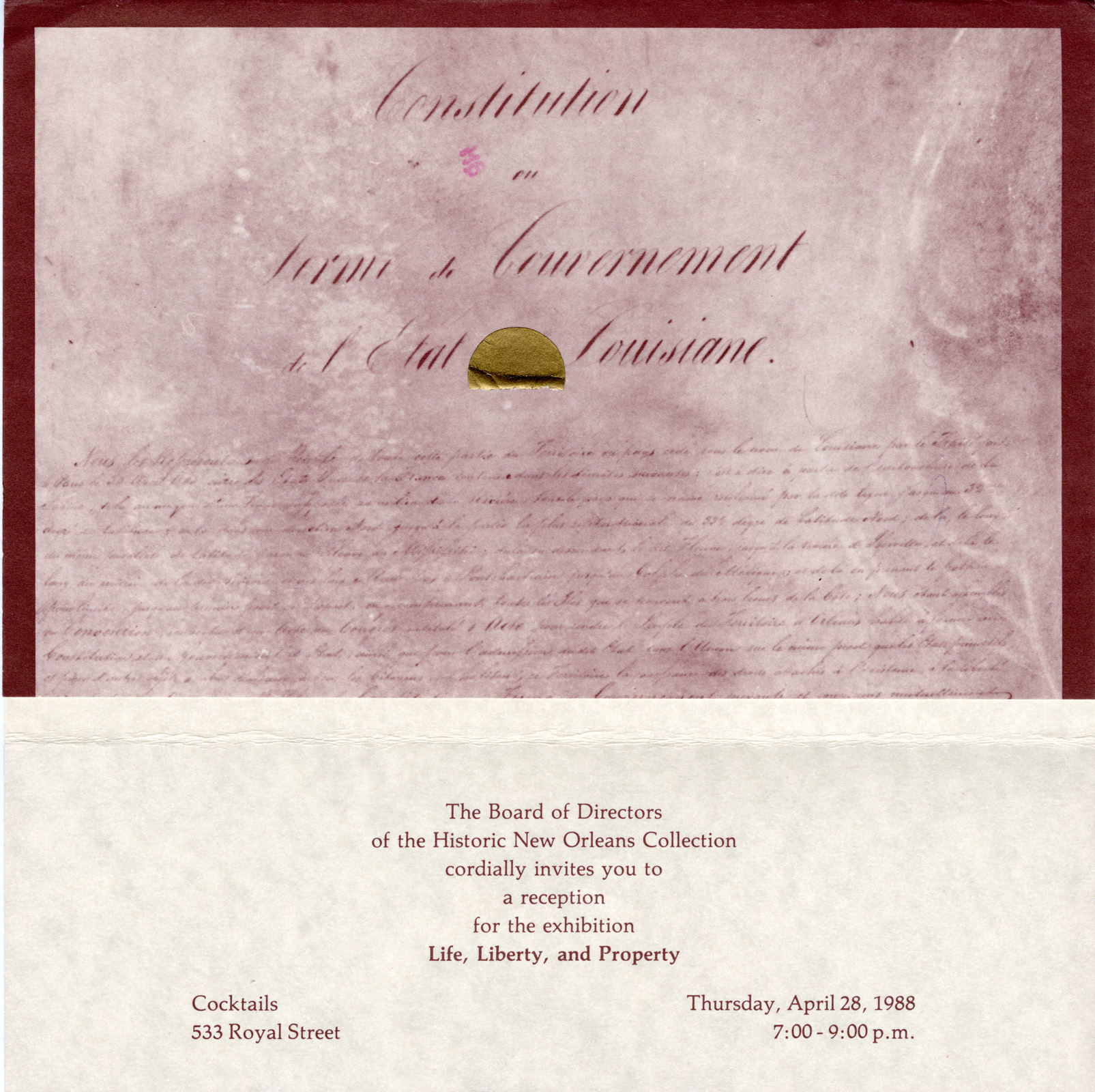
Life Liberty and Property

Exhibit invitation.

Vertical File. Bicentennial, Louisiana Purchase, 1988.

Life Liberty and Property

Life Liberty and Property

Exhibit invitation.

Vertical File. Bicentennial, Louisiana Purchase, 1988.

Life Liberty and Property

Italian Golf Open

Program.

Vertical File. Italian Golf Open, 1976.

Italian Golf Open

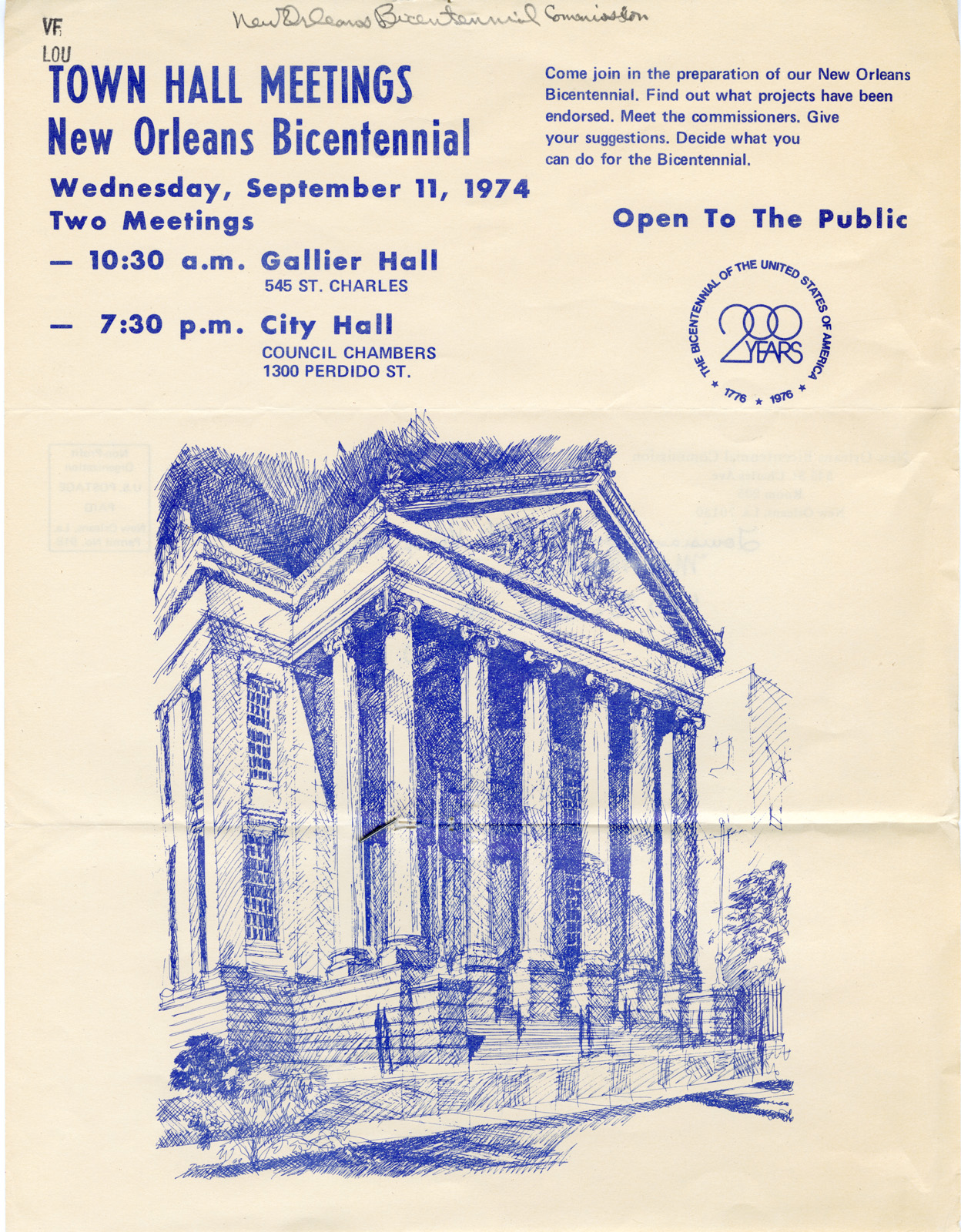
Town Hall Meetings

Invitation to Bicentennial meetings.

Vertical File. New Orleans Bicentennial, 1974

Town Hall Meetings

Mardi Gras krewes like Proteus, Thoth, and Zeus joined in the celebration by making the bicentennial part of their 1976 parade theme.

Hover over an image to learn more; click to enlarge the image.

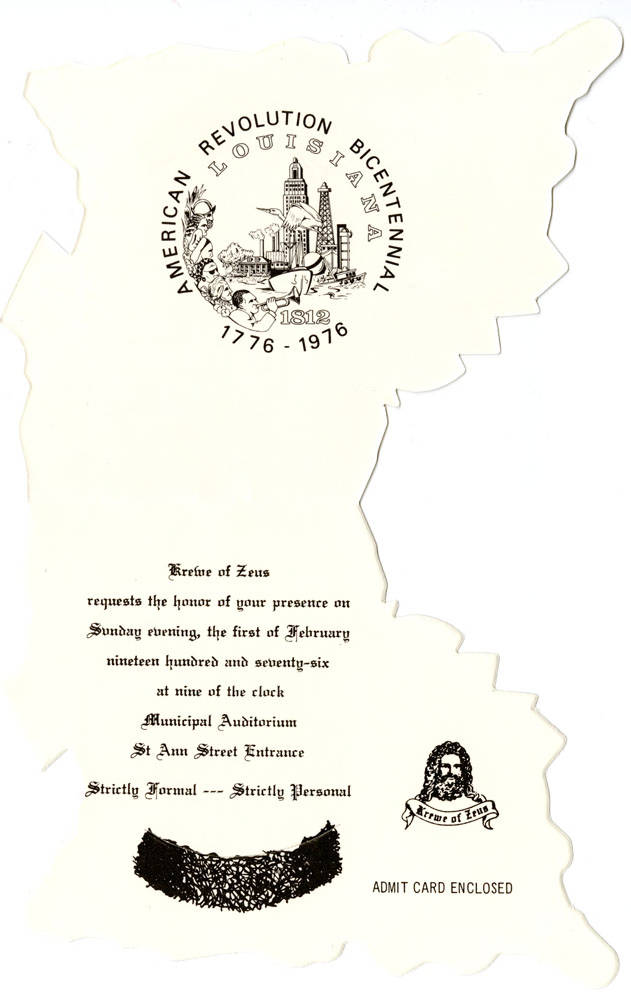
Zeus Invitation

Zeus Invitation

The flags in the Wind. The Story of of Louisiana. 

Special Collections. Carnival. Zeus, 1976.

Proteus Invitation

Proteus Invitation

200 Years of American Ingenuity. 

Special Collections. Carnival. Proteus, 1976.

Thoth Program

Thoth Program

America the Beautiful.

Special Collections. Carnival. Thoth, 1976.

Zeus Invitation

Zeus Invitation

The flags in the Wind. The Story of of Louisiana. 

Special Collections. Carnival. Zeus, 1976.

Proteus Invitation

Proteus Invitation

200 Years of American Ingenuity.

Special Collections. Carnival. Proteus, 1976.

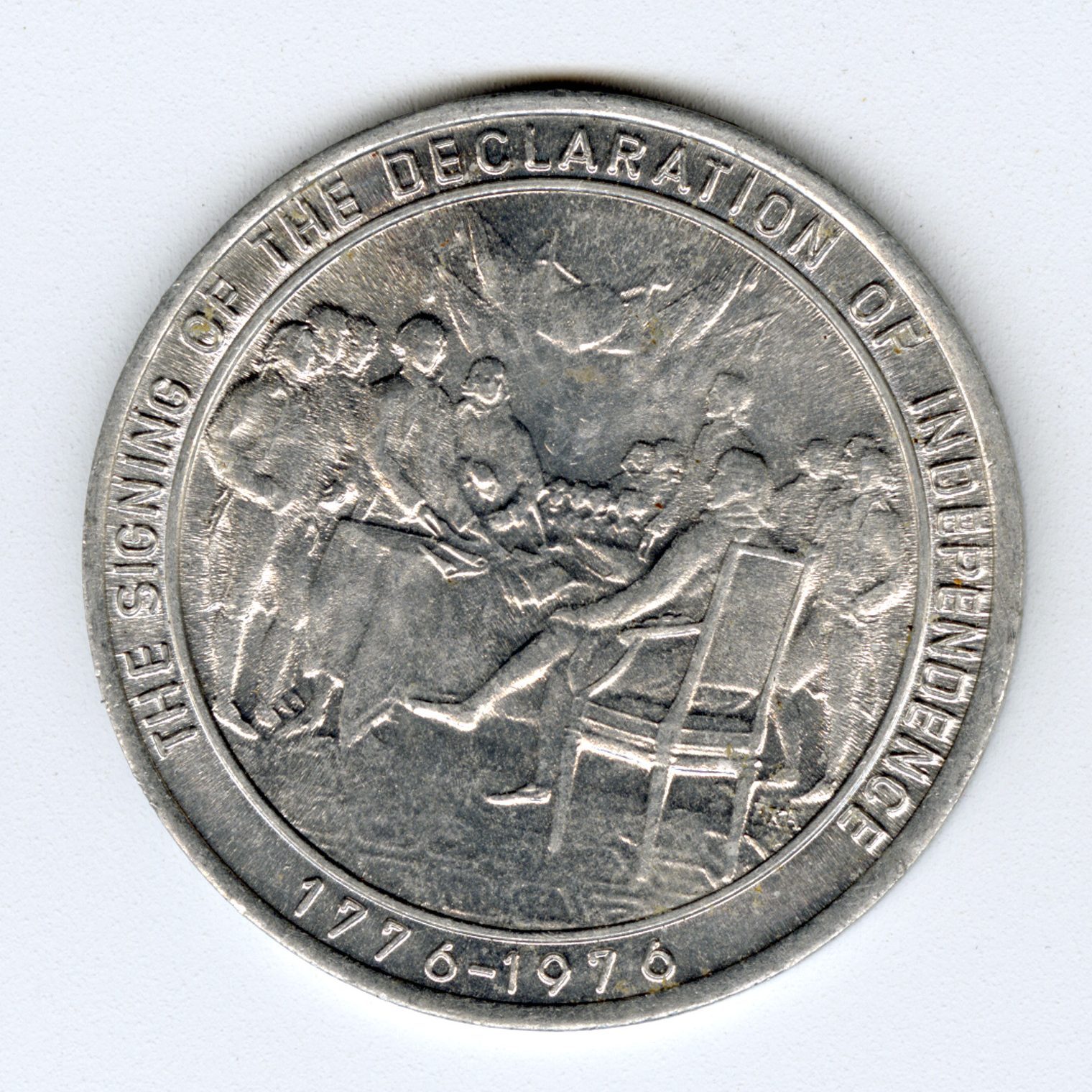
Crescent City Doubloon

Crescent City Doubloon

The Signing of the Delcaration of Independence.

Special Collections. Carnival. Krewe of Crescent City, 1976.

Thoth Doubloon

Thoth Doubloon

A Bicentennial Salute: From the Pages of History. 

Special Collections. Carnival. Thoth, 1976.

Even in non-anniversary years, New Orleans finds ways to celebrate America during Carnvial.

	 Rex Float Design -  Number 3, 1940

Rex Float Design - Number 3, 1940

 Rex paraded on Mardi Gras day, February 6,1940, with the theme "A Fantasy of the Alphabet."

Special Collections. Léda Hincks Plauché Collection, 1940.

Rex Float Design - Number 20, 1947

Rex Float Design - Number 20, 1947

Rex paraded on Mardi Gras day, February 18,1947, with the theme "What is the Sea Shell Saying?"

Special Collections. Léda Hincks Plauché Collection, 1947.

Endymion Doubloon

Endymion Doubloon

 Heartbeat of America. 
Special Collections. Carnival. Endymion, 1981.

Bacchus Doubloon

Bacchus Doubloon

 Heroes and Heroines of America. 

Special Collections. Carnival. Bacchus, 1982

Parade

Parade

Washingtons' Birthday Ball" float with maskers passes crowd on street. Day parade.

Special Collections. Carnival.

Parade

Parade

Float of maskers dressed as colonial women. Day parade.

Special Collections. Carnival.

New Orleans Grows Up Too!

While the Continental Congress was approving the Declaration of Independence in Philadelphia in July of 1776, New Orleans had it’s own local political agenda. In 1776, New Orleans was still a Spanish colony, and the local governing organization was the Cabildo. From the Acts and Deliberations of the Cabildo we see that the July 1776 meeting was focused on two issues: standardizing Weights and Measures and funding Charity Hospital. The following summary translations are taken from the Digest of the Acts and Deliberations of the Cabildo

Weights and Measures: The Commissioners resolve to implore the Governor to order a public edict to the effect that all persons who sell in the city must appear before the Commissioners and bring their weights and measures for comparison with the official ones kept in the Cabildo. Same to be marked and penalty provided for substitution.

Charity Hospital: At this meeting it was agreed that one half of all fines levied against violations of the Weights and Measures Law be donated to the Charity Hospital.

Manuscript record
Acts and Deliberations of the Cabildo. July 5, 1776.

New Orleans has grown significantly since its founding over 300 years ago. In 1731 New Orleans was just a few blocks along the Mississippi River comprising about half of the area now known as the French Quarter. Compare that to this 1976 Bicentennial map in which New Orleans stretches from the River to Lake Pontchartrain, and from Lakeview and Carrolton uptown all the way past Lake Catherine in the East, and also part of Algiers across the River.

Map of New Orleans 1731
Map of New Orleans, 1976

The parts of the map that are colored white are New Orleans, and the yellow to the west shows neighboring Jefferson Parish, and the yellow to the east indicates St. Bernard Parish.

The opening of the Panama Canal increased New Orleans’ importance as a port city in the early twentieth century. See this undated pamphlet highlighting the unique features of New Orleans after the completion of the Canal.

This document predicted that New Orleans would have a population of over a million by 1940.

Click on the document to read it.

New Orleans kept on growing, and celebrated its 250th Birthday in 1968 and its 300th Birthday in 2018! 

Sesquicentennial

Sesquicentennial

250th Anniversary Printing Plate.

Special Collections. Ephemera, 1968.

Sesquicentennial

Sesquicentennial

250th Anniversary Printing Plate.

Special Collections. Ephemera, 1968.

Tricentennial

Tricentennial

Programs at New Orleans Public Library celebrating the 300th Anniversary in 2018.

New Orleans Public Library, 2018.

With such rich histories it’s interesting to wonder how both America and New Orleans will continue to grow and the impact that they will have on one another!

This digital exhibit, based on a physical exhibit, was created by Amy DeNisco in 2026.

Thank you for sharing your photos with us! Please save your photos to Sneauxmageddon Photo Submissions.